Ambulance Life: A Paramedic Simulator — A Code Blue for Simulation Gaming
You ever see a train wreck happen in slow motion? That’s what playing Ambulance Life: A Paramedic Simulator feels like. I’ve been reviewing games since the days of the Atari 2600, and I’ve seen my share of rushed, broken, and outright misleading titles. This one takes the gurney and drives it straight off a cliff.
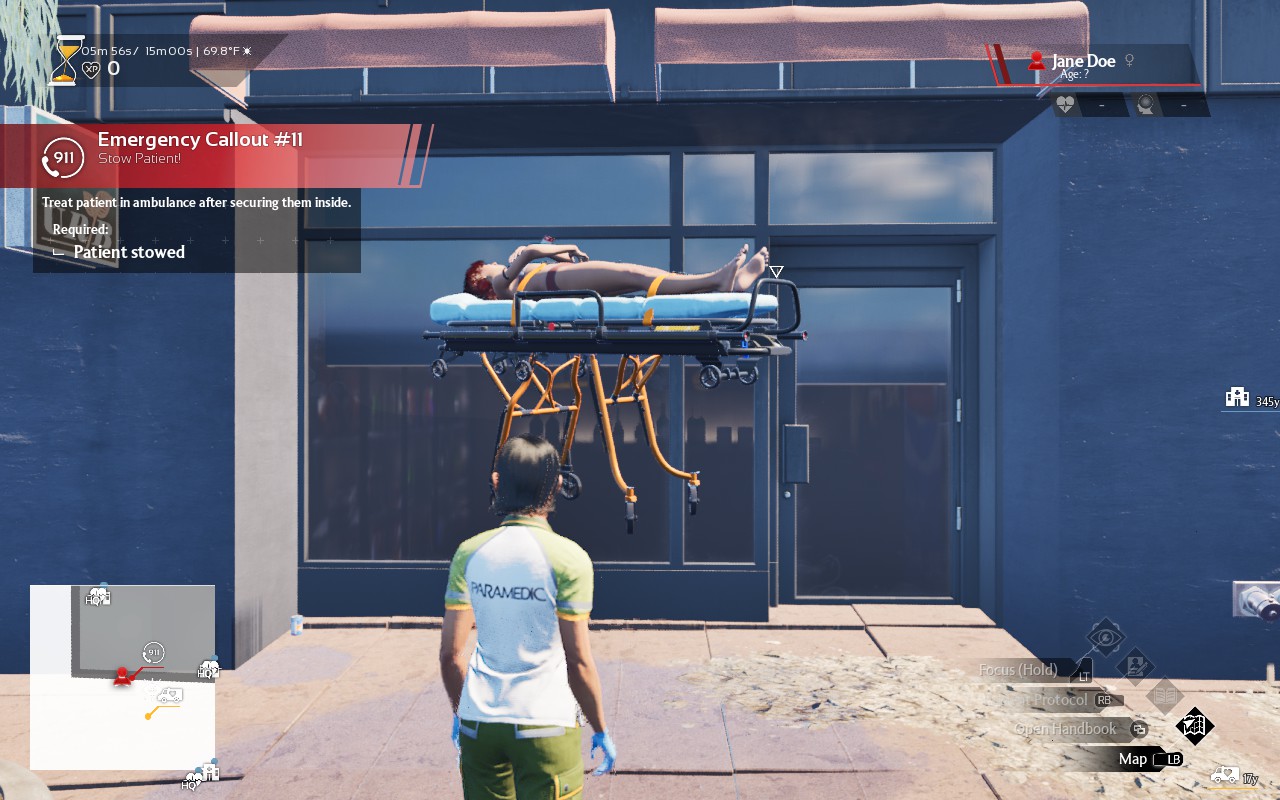
Let’s start with the premise: you’re a paramedic in the fictional West Coast city of San Pelícano. You respond to calls, treat patients, and transport them to hospital. Sounds like a solid foundation for a simulation game, right? The developers even claimed they worked with real medics. But the reality is so far from accurate it’s almost comical. I’ve read more realistic medical procedures in a Terry Pratchett footnote.
From the moment you boot the game, the performance issues slap you in the face. Even on a modern rig with an RTX 5060, the game chugs along at a framerate that makes PowerPoint presentations look smooth. NPCs glitch through objects, traffic AI is braindead (you’ll be stuck behind a car that refuses to move even with sirens blaring), and the game frequently locks up or crashes. Back in my day, a game shipped complete. This thing runs like a three-legged horse.
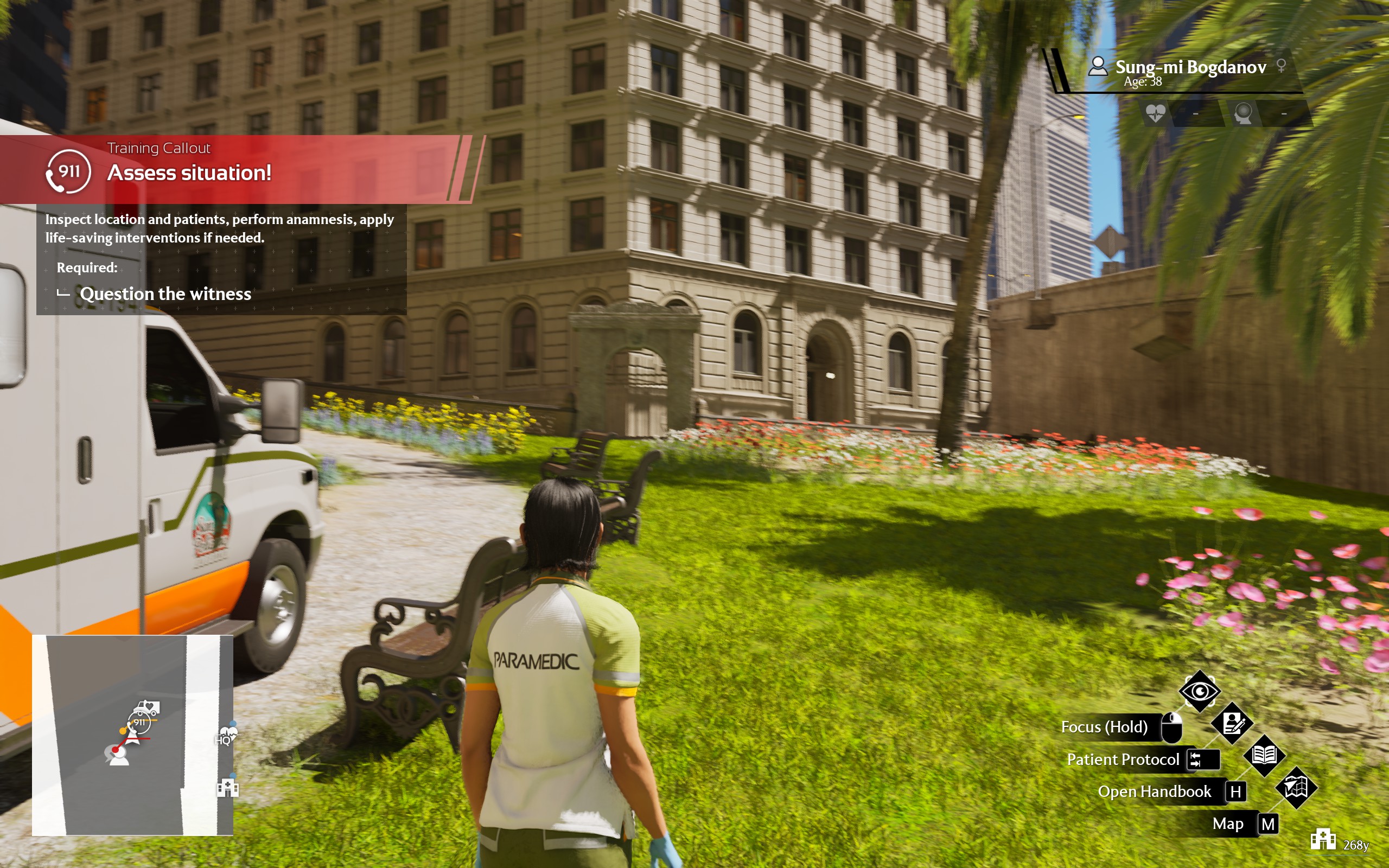
But the real tragedy is the medical simulation itself. Let’s be clear: this is not a simulator. This is a guessing game dressed in scrubs. You have to unlock treatments and diagnostic tools by gaining experience points. Yes, in a game that calls itself a simulator, you start without a glucometer or basic airway management. So when you get a patient having a panic attack, and hypoglycemia might be the cause, you can’t even check their blood sugar because that tool is locked behind levels. The game will then scold you for not treating it. How is that simulation? That’s a grind.
Actual paramedics who bought this game for a laugh have torn it apart. And they’re right. The calls make no medical sense. A trauma patient with a bleeding leg becomes hypoxic, and the game attributes it to “extreme stress” rather than, say, a tension pneumothorax or cardiac tamponade. Treatments are mislabelled — intubation is a button push, but bandaging a wound requires a finicky rhythm minigame that feels like Dance Dance Revolution with gauze. Lung sounds are described as “cracks” instead of “crackles.” The partner in the back of the ambulance freaks out if the patient’s temperature drops half a degree, but when the patient actually codes during transport, you can’t do anything — you can’t even go back there. The only ECG monitor is a small animation in the corner that plays when they die. That’s not simulation, that’s a mockery.
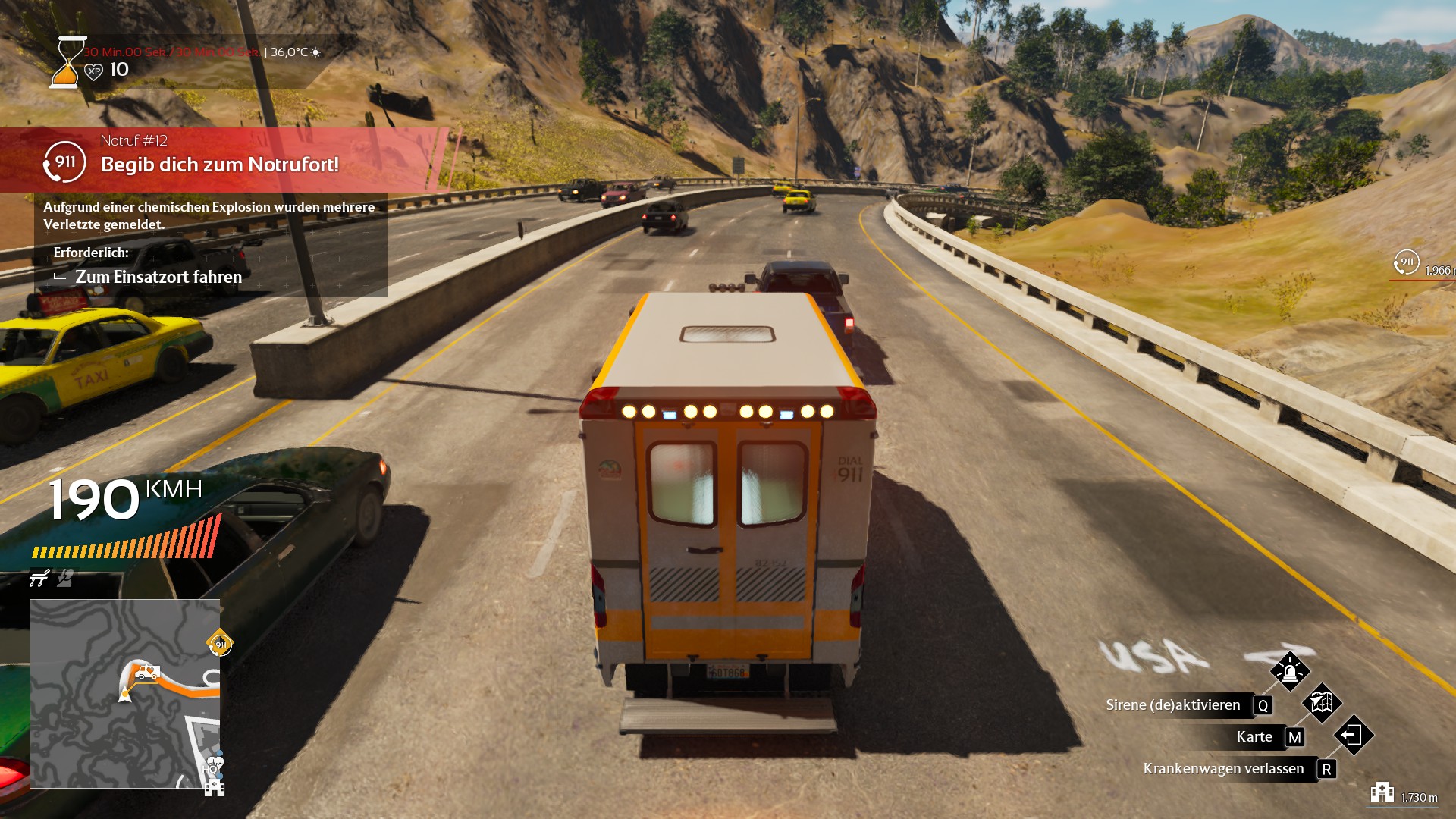
The driving is equally atrocious. The ambulances handle like a refrigerator on roller skates. You will crash into everything. The second vehicle you unlock has such ridiculous oversteer that tapping the steering key sends you into a 90-degree spin and then, according to one player, the van suddenly flies across the map like something out of a Harry Potter movie. I don’t know if that’s a bug or a feature, but it’s certainly not realistic.
The UI is a labyrinth of poorly explained menus. After a call, the game might tell you made a mistake, but offers no feedback on what you did wrong or how to fix it. You’re left to trial-and-error your way through scenarios that often don’t match their own dialogue. It feels like the developers spent more time on the trailer than on actual gameplay.
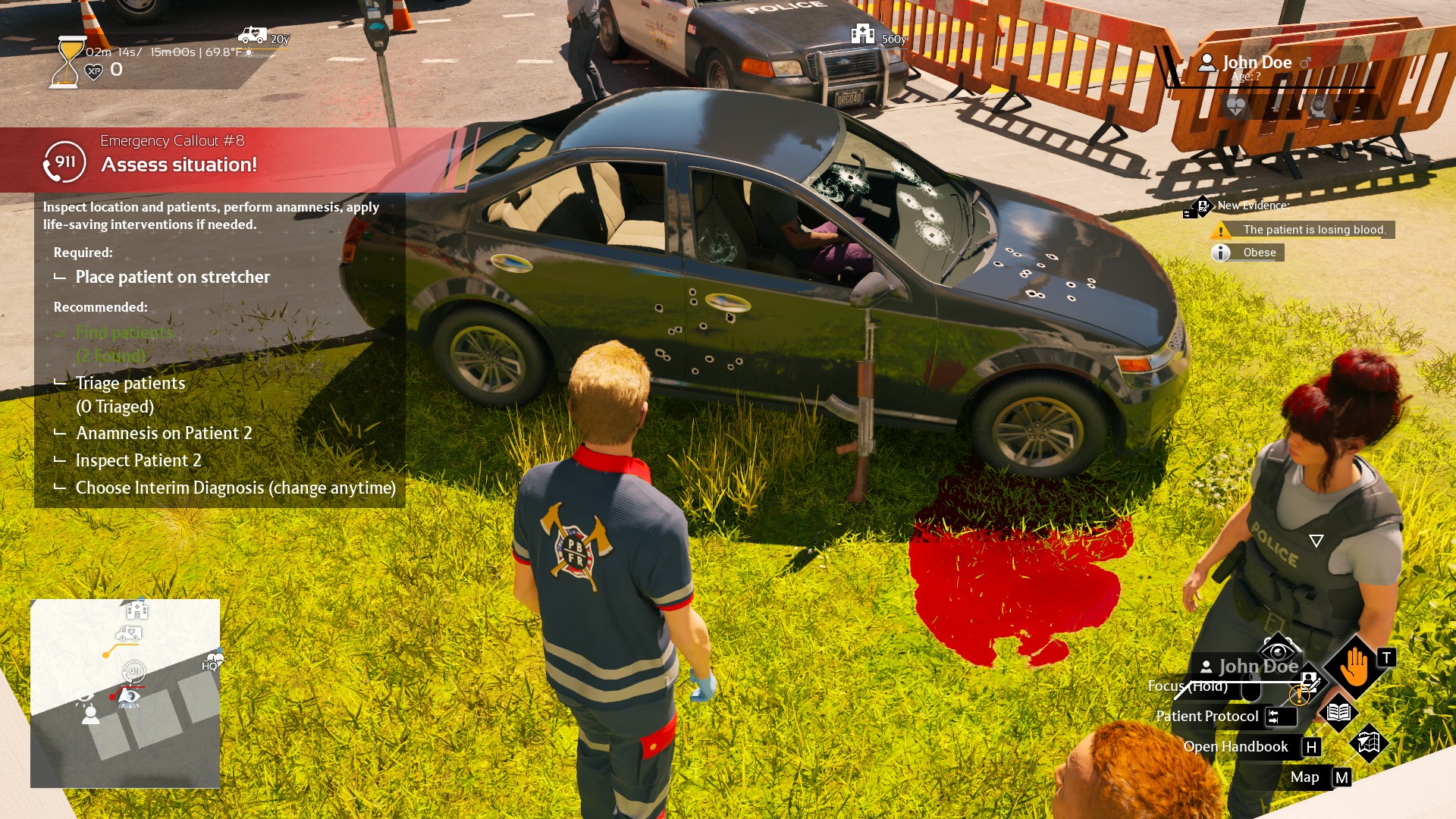
Now, I’ll try to find something positive. The scenarios themselves have a certain structure that could be interesting if the rest of the game worked. You can choose which arm to take blood pressure on. The game lets you change your working diagnosis without penalty. And there’s an attempt to use proper medical terminology like “anamnesis” — though they then call lung sounds “cracks,” so it’s inconsistent. But these small glimmers are drowned in a sea of poor decisions.
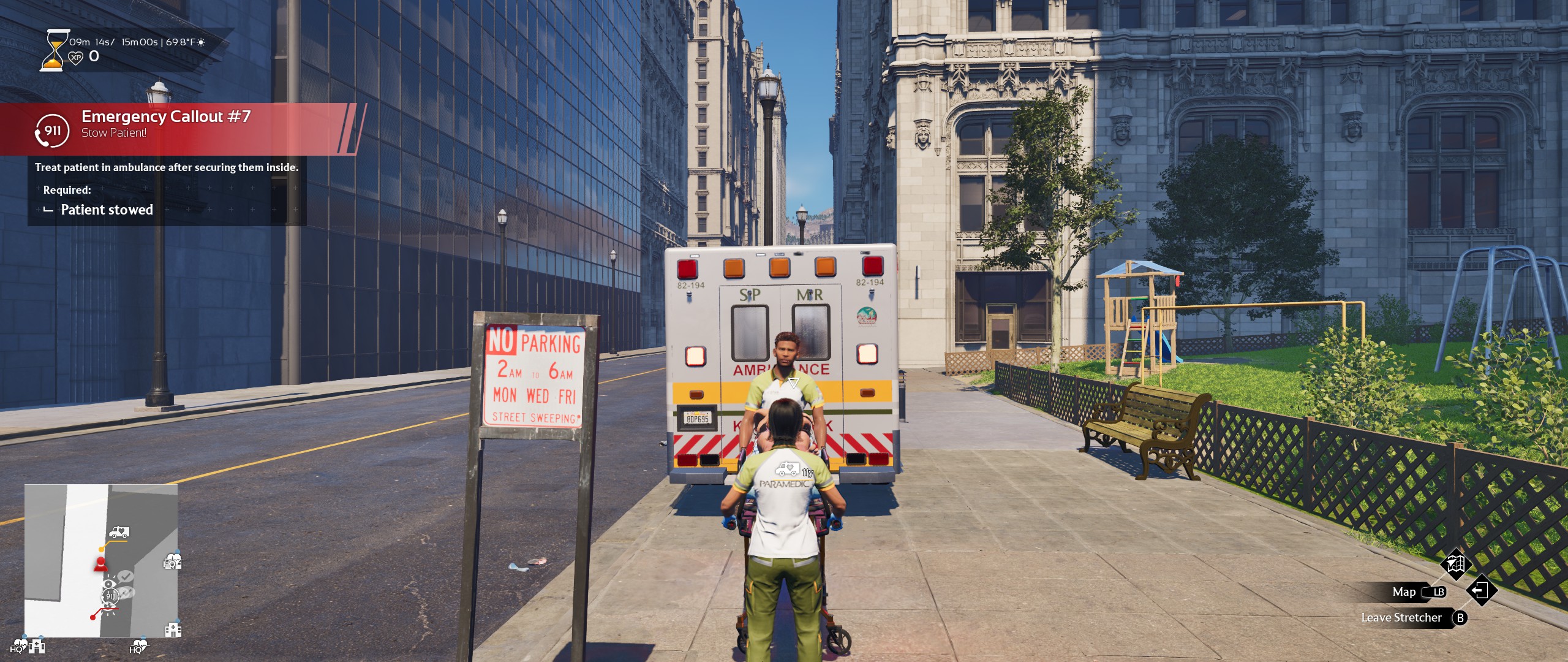
Some players have suggested this game could have been a decent tabletop exercise if stripped of the broken minigames and XP grind. I’d go further: Arma 3 with the ACE medical mod does a better job of realistic paramedicine than this. And that’s a military shooter.
In the end, Ambulance Life is a missed opportunity of staggering proportions. It had potential — a dedicated paramedic simulator is a niche that many would welcome. But poor technical performance, laughable medical inaccuracies, and a fundamental misunderstanding of what makes a good simulation game have resulted in something that’s neither educational nor entertaining. Unless you find watching a flying ambulance and failing to treat a paper cut with ketamine funny. But even then, the humor wears thin after the third crash to desktop.
I can’t recommend this game to anyone, least of all to actual EMS workers or students hoping to learn. You’d be better off watching reruns of ER. At least that show gets some things right. Ambulance Life gets nothing right. It’s a code blue, and no amount of chest compressions will revive it.
Score: 2 out of 10