Arms of God: Promising Embers in a Rough Kiln
I’ve been playing games since the Atari 2600, when a “bullet heaven” meant you were dodging in Space Invaders and praying your TV didn’t burn in. Now the genre has a dozen names—survivor-like, roguelite arena shooter—and a thousand imitators. Arms of God enters that crowd with a Doom-inspired metal soundtrack, a Warhammer 40k-coded aesthetic of crusaders and cybernetic arms, and the promise of wielding five weapons at once. After a dozen hours across early access runs, I can tell you this: the bones are here. The muscle? Still forming.
The core hook is undeniably cool. You play as a templar, one of ten unlockable heroes, battling through 60 “handcrafted” levels split into acts. You start with a single weapon and, by collecting souls from slain demons, you buy more arms in the between-round shop. You can equip up to five weapons simultaneously, mixing melee and ranged, and merge duplicates to evolve them into deadlier forms. The first time you fuse a pair of machine guns into an autocannon, then slap on a modifier that turns it into a screen-wide airstrike? That’s a moment. The upgrade system, with its tiers and weapon traits, invites genuine experimentation. I found myself putting random blessings on a fire-magnum just to see what happened, and when it clicked—holy hell, did it click.
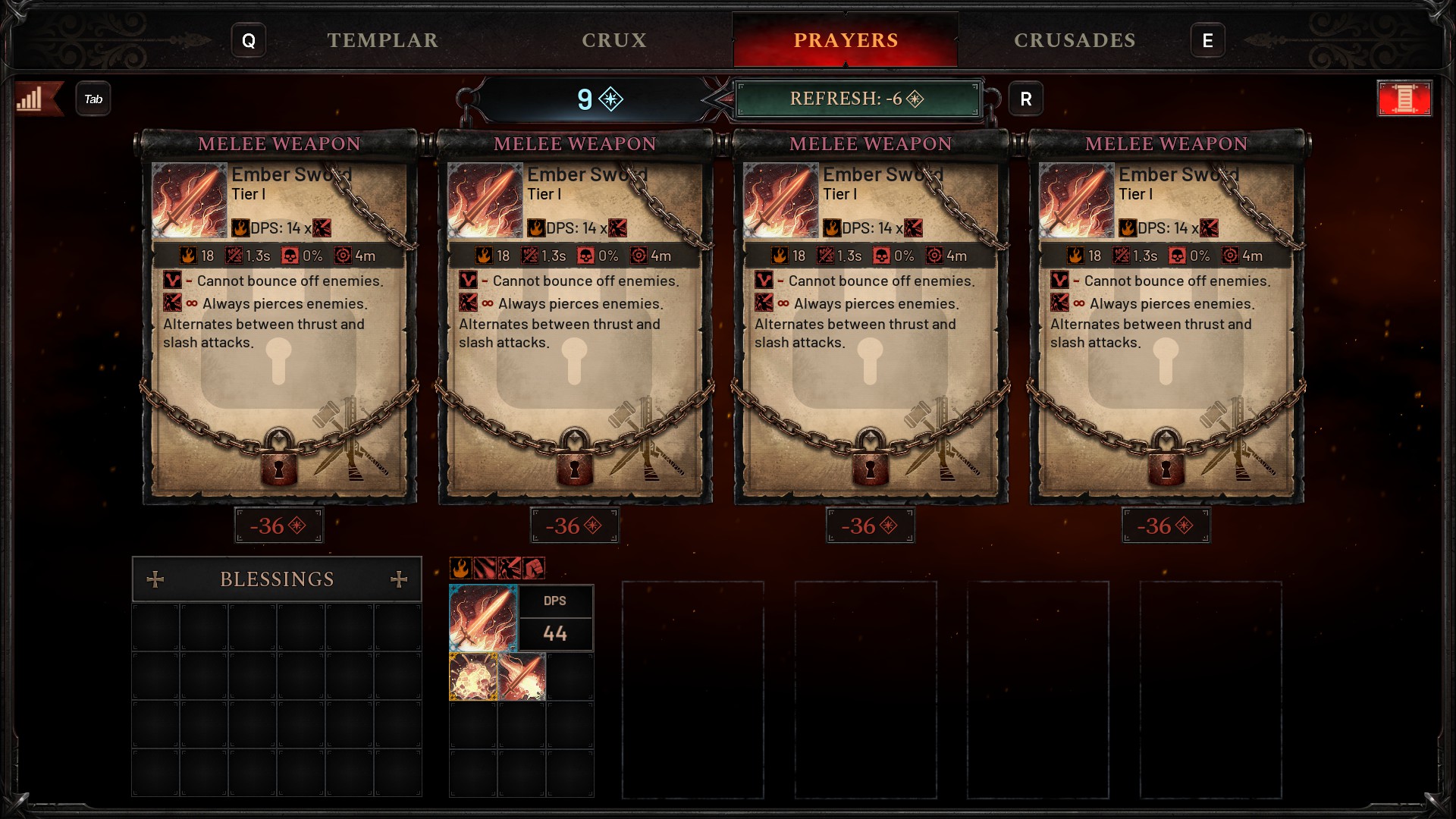
The problem is that those moments are too rare. Many players report that runs feel “samey” after a few hours, and I must agree. The weapon variety, while boasting over 60 options, collapses under scrutiny. Most are simply tiered upgrades of the same six or seven archetypes: a melee swing, a projectile, a beam, a ground AoE, a circling orb, a launcher. A “holy hammer” and an “electric hammer” behave identically except for the damage type and a status effect. When the core selling point is buildcrafting, having the actual behavior of weapons feel largely interchangeable is a cardinal sin. The genre’s greats—Vampire Survivors, Brotato—succeed because every weapon feels like a new way to play. Here, you’re mostly optimizing math.
The meta-progression is another mixed bag. The Cathedral hub offers a training ground for stat boosts, an alchemy chamber for passive buffs, an armory for weapon unlocks, and a bell tower to summon new heroes. That’s a lot of systems, and they’re explained poorly. I spent my first three runs completely lost on how to unlock new blessings or what “banishing” prayers from the pool actually did. The UX is clunky—controllers frequently lose functionality in menus, tutorial pop-ups sometimes can’t be closed without an Alt-F4, and the whole thing feels like it was designed for mouse-and-keyboard first, with gamepad support as an afterthought. On Steam Deck, I had to drop settings to low for stable 30fps, though the game still looked fine.
Balance is the elephant in the room. On the basic difficulty, you’ll coast for hours without a death. I didn’t die until my fifth run, and that felt sudden and arbitrary, not like a lesson learned. Then, on Nightmare, the difficulty spikes like a demon with a grudge. Certain weapons—the frost blade, the skystrike line of electric AoE—drastically outperform everything else. You’re incentivized to ban weaker prayers from the pool to force the same optimal build every run, which defeats the purpose of a roguelite. Why would I take a blessing that gives +10% crit but -10 HP when I can just wait for a purely positive one? The dev has promised balance patches, and Early Access is the time for that, but right now, runs often feel like they win themselves or lose through no fault of your own.
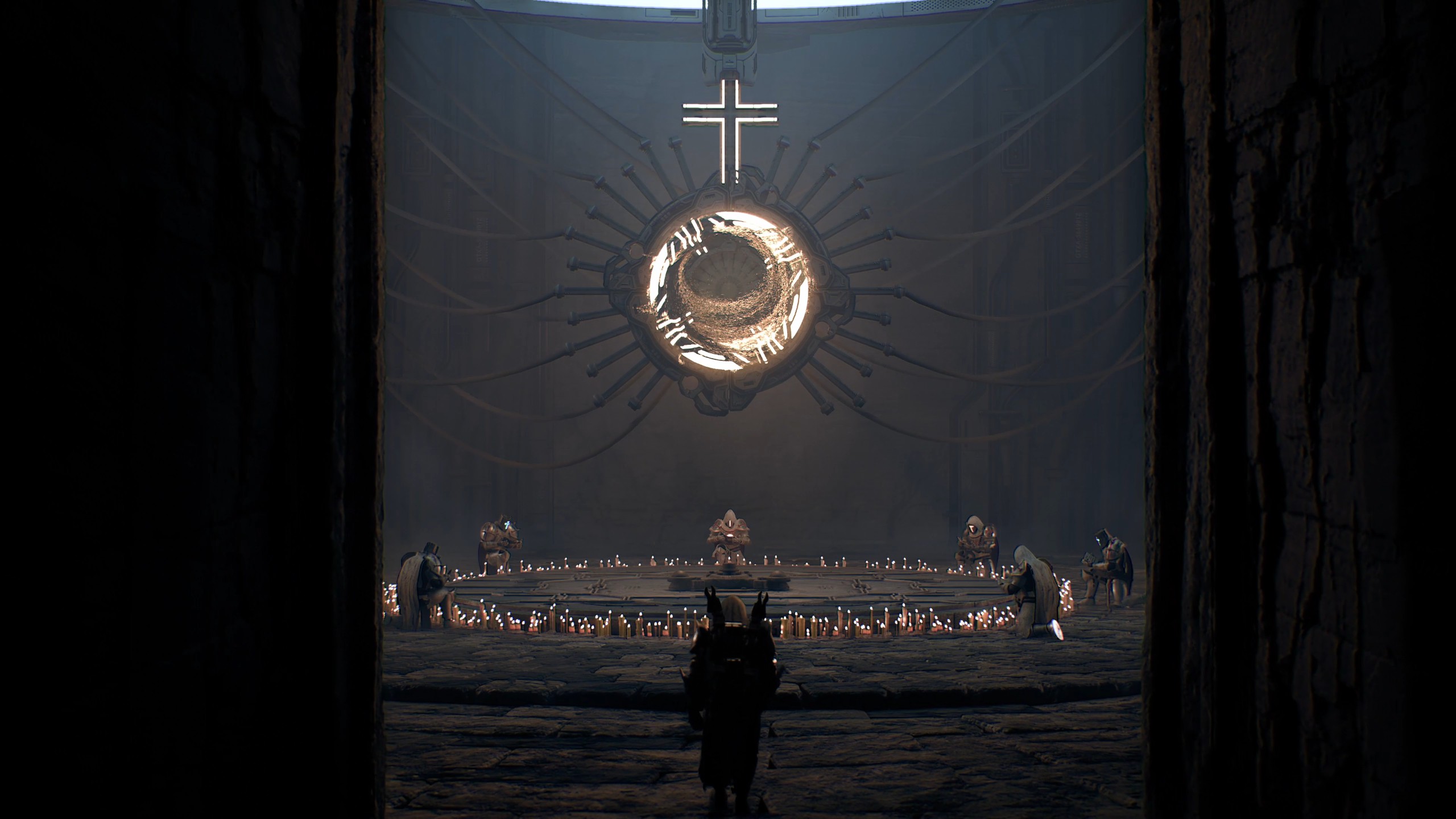
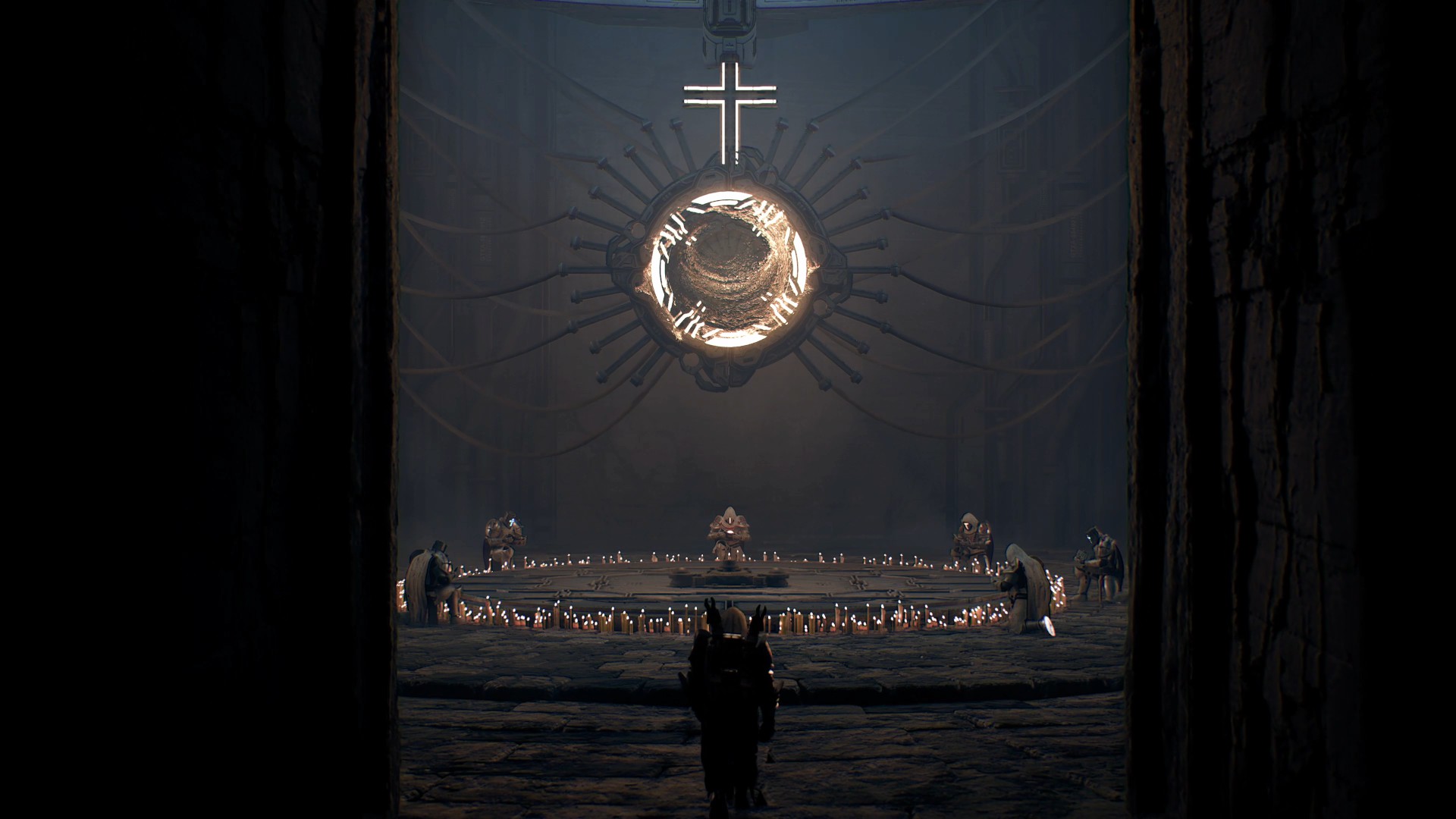
One of the most contentious systems is the round structure. Each act is fifteen rounds, each lasting 60-90 seconds. You fight, then hit a shop, then fight again. At the end of each round, your mobile crucifix—the Crux—explodes, vacuuming up uncollected souls and converting them to XP. This creates an odd tension: you’re punished for kiting enemies away from the Crux, but the small arenas force you to stay near it anyway. The sub-objectives (collect banners, defend generators, click podiums) feel tacked on and often distract from efficient soul collection. After fifteen rounds, you either face a boss—who you don’t actually need to kill, just survive until the timer ends—or you progress to the next act. Bosses are anemic and forgettable, which is a shame given the game’s aesthetic promise.
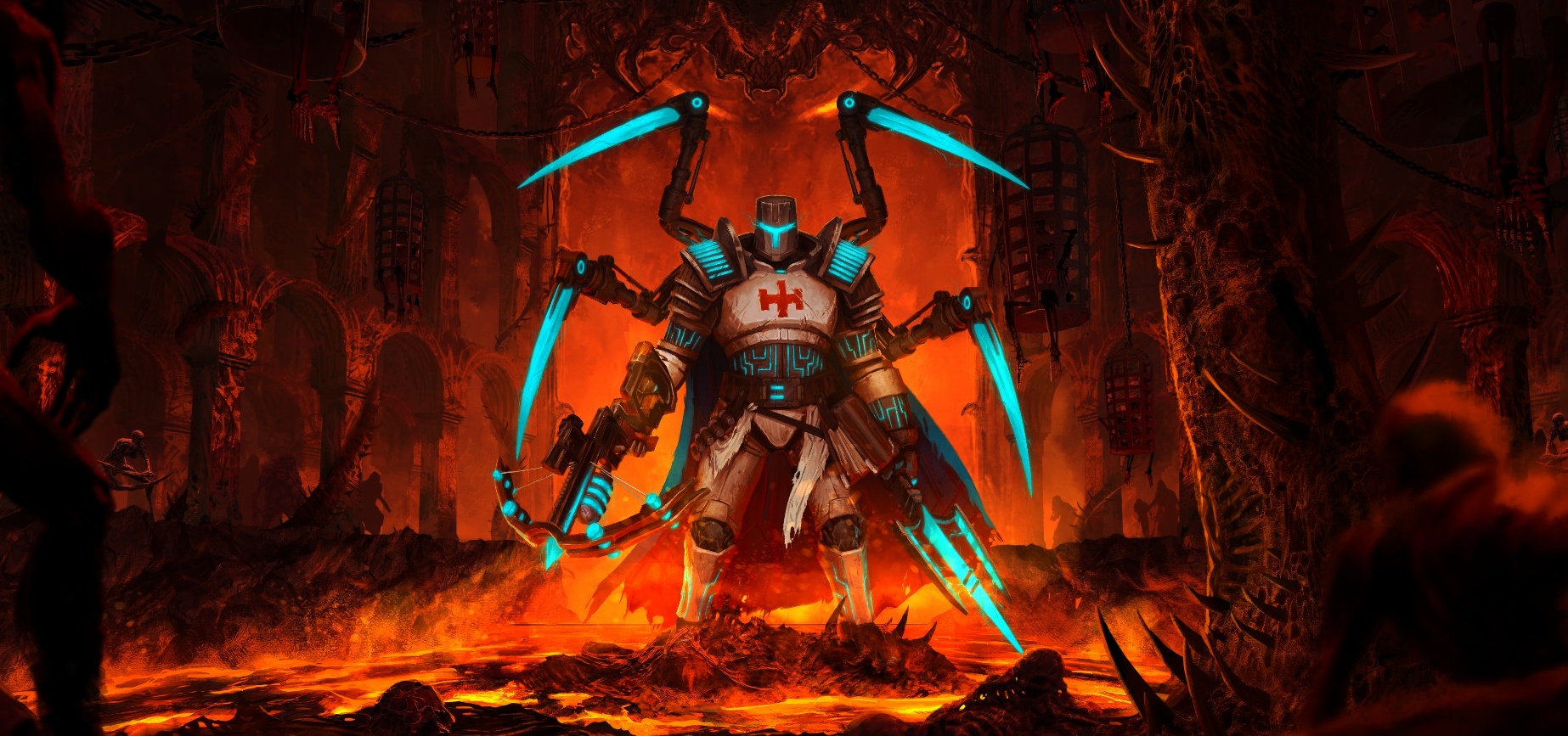
The music and art direction are the strongest pillars. The metal soundtrack is genuinely good, fitting the relentless pace, though track variety is limited and will grow stale after twenty hours. The enemies are grotesque and varied in behavior—I appreciated the toadstool spitters and charging brutes, even if their attack animations sometimes don’t sync with damage timing. The gothic-cyberpunk visuals, all stone cathedrals and mechanical limbs, feel lifted from a Warhammer 40k codex, and I mean that as a compliment. The game looks like a crusade.
There’s also the AI art controversy. The developer initially admitted to using generative AI for some icons, promising to replace them before full release. A later update removed those assets, and the store page’s AI disclosure was scrubbed. But several players—including myself—still feel a lingering distrust. The menu art has that telltale washed-out, flat quality. If the developer is being transparent now, good. But I’ve read better lore consistency in a second-hand paperback than in the game’s explanation of what’s AI and what’s not. It’s a black mark on an otherwise earnest project.
Despite these flaws, I can’t deny the fun. When a build comes together—say, five consecrated maces on a melee-focused templar, freezing and shattering everything in a 360-degree arc—the game sings. The Crux mechanic, where you balance investing souls in your own power versus the cross’s abilities, adds a genuine risk-reward layer that I haven’t seen done quite this way before. The weapon fusing system, for all its balance issues, encourages creativity. And the solo developer deserves respect for the sheer scale of the endeavor. In Early Access, this is a 6/10 game with a ceiling, if patched well, of 8 or 9.
Would I recommend it now? Only if you’re a hardcore fan of the genre who doesn’t mind grinding through rough edges. The price is fair, the content is there for dozens of hours, and the potential is visible. But if you’re looking for a polished, instantly addictive experience, Vampire Survivors and Brotato still reign. Arms of God is a promising second draft in a genre that demands perfection on the first page.