Dirty Business: A Promising Crime Sim That Needs a Lot of Time in the Oven
I’ve been playing video games since the Atari 2600 was the hot new thing in the living room. I’ve seen empires rise and fall, from the golden age of point-and-click adventures to the modern era of endless early access. So when I booted up Dirty Business, I felt a familiar pang of déjà vu. Here we have another ambitious simulation game that promises the thrill of building a criminal empire from a hidden underground hangar. You produce drugs, craft weapons, print fake money, run a cartel airstrip, hire workers, expand your gang, and take over city distribution. It sounds great on paper. In practice? It’s a game that’s fighting itself every step of the way.

Let’s start with the controls, because this is where the game first stabs you in the back. The inventory and object handling are, without exaggeration, some of the most frustrating I’ve encountered since the days of early 3D adventure games. You pick up an item, and if you try to pick up another item, the first one falls to the floor. There’s no way to swap items in your hands without dropping everything. Combined with a hotbar of only five slots that can only hold one stack of each item type, you’ll spend half your time running back and forth between shelves and the delivery elevator. Want to fill a box for an order? You have to put the box on the ground, open it, place items from your inventory into it, close it, then pick it up and put it on the elevator. You can’t fill a box while holding it. This is the kind of design that makes you wonder if the developers ever actually played their own game for more than ten minutes.

The physics are equally bizarre. Boxes fly across the room for no reason. Empty bags of soil stack with full ones in your inventory. You can’t place furniture flush against walls because the grid system won’t allow it. And you cannot delete or repackage furniture once placed—you can only rotate or move it. If you accidentally put a table in a stupid spot, it’s there forever, mocking you. The tutorial is a mixed bag: it holds your hand tightly with free items and guardrails, but it doesn’t teach you how to efficiently manage your space or avoid the game’s many pitfalls. By the time you’ve unlocked the recycling bin (at level 3, because obviously a trash can is high-tech), you’ve already accumulated a mountain of empty boxes that you can’t easily dispose of. Speaking of which: cleaners do not clean up empty boxes you drop. You have to manually close each box, then throw it in the bin—and you’ll accidentally pick up the bin itself about two thousand times because the interaction radius is a mess.
But let’s talk about the watering can. I’m not kidding. You cannot refill the watering can. In a game where one of the first things you do is grow weed, you are forced to buy a new watering can every time it runs out. There is no animation for refilling it, no faucet, no sink. The only explanation I can think of is that the devs just didn’t want to make a refill animation. This is the kind of absurdity that makes you deduct a full point out of spite. Multiple players have begged for this fix, and it remains unfixed. Put a sink in the basement. Let me right-click on a water barrel. Do something. This isn’t a “feature,” it’s a design oversight that screams “we released this too early.”
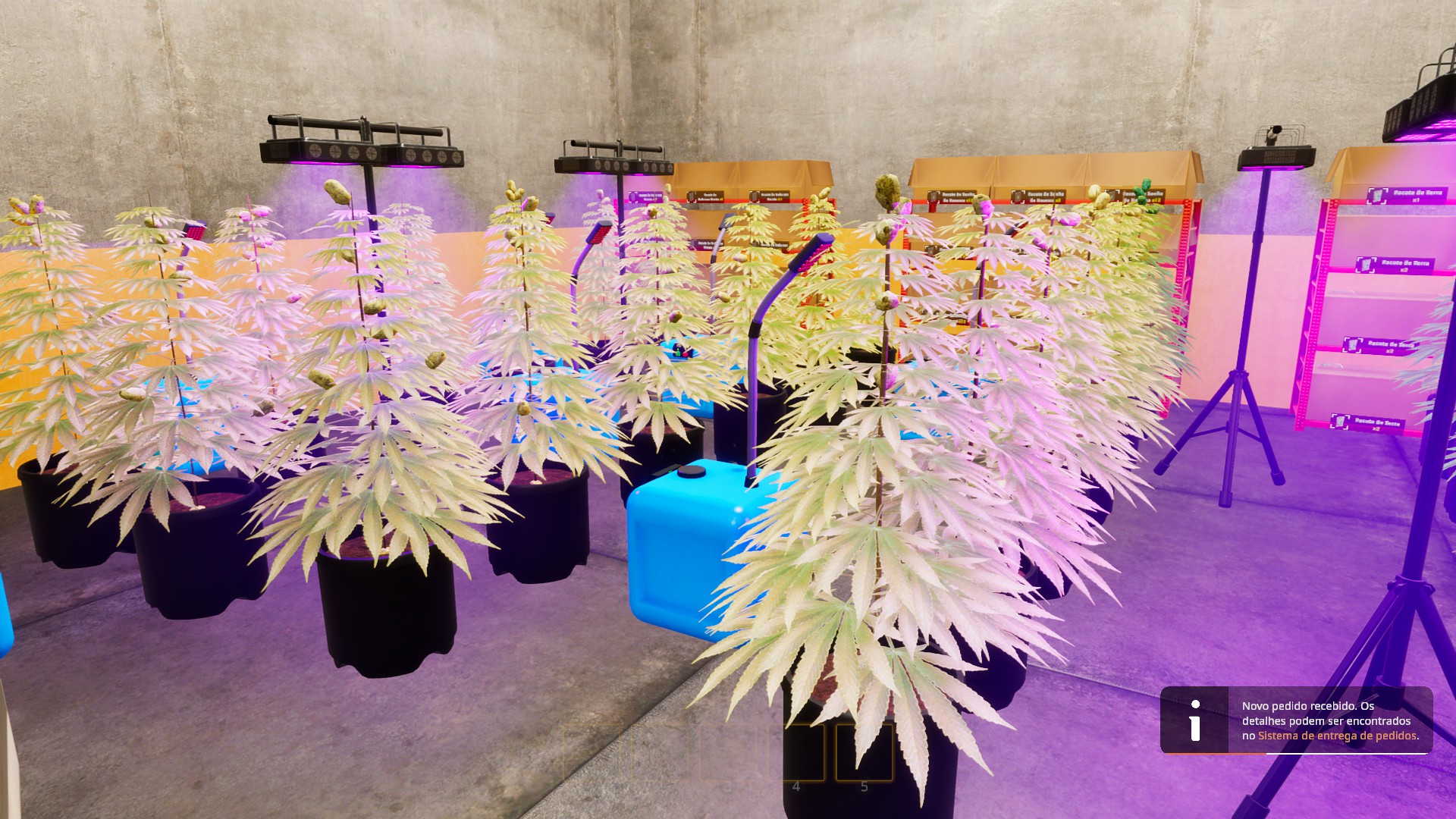
Progression is another sore spot. The game is grind-heavy, and not in a satisfying way. You don’t get your first worker until level 13, which means you spend the first several hours doing everything manually: planting seeds, watering, harvesting, restocking shelves, packaging orders. The leveling system gates almost everything. Storage shelves, recycling bins, better workers—all locked behind arbitrary level requirements. When you unlock a new production line, like acid or LSD, you don’t get a worker for that line until many levels later. For LSD, the gap is 14 levels. Until then, you have to babysit the timers yourself, and if you get distracted refilling shelves for your other workers, your batch gets ruined. The game punishes you for trying to expand your operations. The most efficient strategy, according to veteran players, is to pick one product type and mass-produce it, ignoring everything else. That’s not “depth,” that’s a broken economy.
Workers themselves are a mixed blessing. They can be set to loop tasks, which is nice, but they require constant monitoring. They’ll fill up your storage with one product while ignoring others. They’ll plant seeds in every available pot, even if you wanted to save some for a different strain. They’ll drop products on the floor when shelves are full. And sometimes they just forget their jobs entirely, standing around with a message like “need output shelf” even though the shelf is right there and has been working fine for days. The AI is inconsistent, and the lack of control over which storage racks they use or which machines they operate makes optimizing a nightmare. You can’t tell your botanist to only use the left set of pots for strain A and the right set for strain B. It’s all or nothing.

Co-op is where the game is supposed to shine, but in its current state, it’s more of a flickering candle. Players can’t interact with the same objects simultaneously. Tutorials interrupt each other. The base layout and building system make it nearly impossible to create efficient workflows for multiple people. The plane smuggling feature, which sounds cool, is basically broken for solo players and clunky even with friends. The flight controls are atrocious—planes fly with no throttle, landing is impossible, and the fuel costs are so high you’ll lose money until you can fulfill massive orders. The covert dealing system (vans and companies) is similarly unbalanced: you pay a daily fee, and if the van gets pulled over, you lose everything and have to pay a huge bail. The risk rarely justifies the reward. Dealers can only carry five bags of weed, and you have to manually call them back to restock. It’s all micromanagement, no automation.
And yet, despite all this, I can’t bring myself to hate Dirty Business. There’s a compelling core here. The production loops—growing weed, 3D-printing weapons, cooking LSD, counterfeiting money—are genuinely fun when they work. The progression, while slow, gives you a sense of building something over time. The graphics are fine, the sound is adequate, and the game runs well enough (no major performance issues reported). The developers are active on the forums and Discord, responding to feedback and releasing regular updates. They seem committed to improving the game. That counts for something. In an age where many early access games are abandoned, a responsive dev team is a rare and valuable thing.
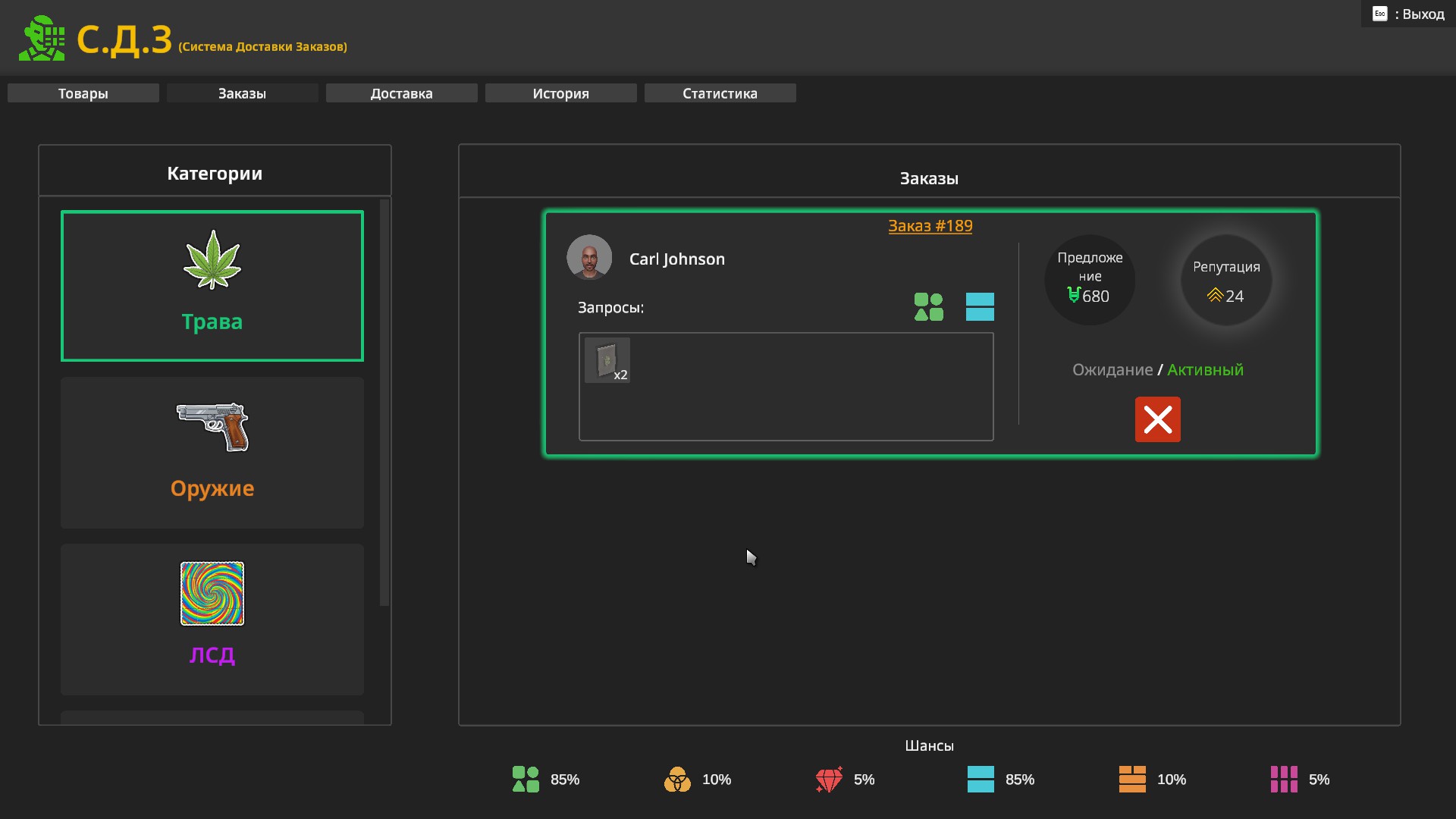
But let’s be clear: this is not Schedule 1. It’s not even a polished early access experience. It feels like a demo with a lot of potential. The controls need a complete overhaul. The inventory system needs to be rethought from the ground up. The watering can needs to be refillable. Workers need better AI and more customization. The progression curve needs to be flattened so you’re not grinding for hours just to unlock basic quality-of-life features. The co-op needs to be made functional. The plane needs to fly properly. And someone needs to go through the game with a fine-toothed comb and fix all the tiny, frustrating bugs that accumulate into a death by a thousand cuts.
I’ve spent over 15 hours in this game. I’ve hit level 34, sold over a million dollars of product. I’ve seen the potential. But right now, I can only recommend it if you have a group of friends willing to suffer through the rough edges together, or if you’re the kind of person who enjoys tinkering with mods to fix what the developers haven’t. For everyone else, I’d say: wait. Let the game cook for a few more months. Check back after a few major patches. The foundation is there, but the house is still full of scaffolding.
Score: 6/10