The Crab Grind: A Review of Everything is Crab
Remember when a game shipped complete? Back in my day, you bought a cartridge, it had all the levels, all the enemies, all the content. You didn’t get a demo that turned out to be 80% of the finished product, and you certainly didn’t see paid DLC roadmaps before the base game even felt finished. Everything is Crab is a textbook case of a great concept executed about halfway, and then wrapped in enough cute pixel art and evolutionary charm to make you forget you’re being asked to grind for a game that feels like it’s still in early access.
The premise is irresistible: you are Darwin, a little blue blob in a living ecosystem where everything is, inevitably, turning into a crab. You evolve by eating, and each evolution changes your creature visually and mechanically. You can grow claws, wings, fur, tentacles, legs—more legs! The art is genuinely delightful, and watching your abomination take shape is the game’s strongest hook. The sound design is cute, the enemies are distinct, and the idea of a roguelite where you adapt to a world that’s adapting alongside you is, on paper, brilliant.
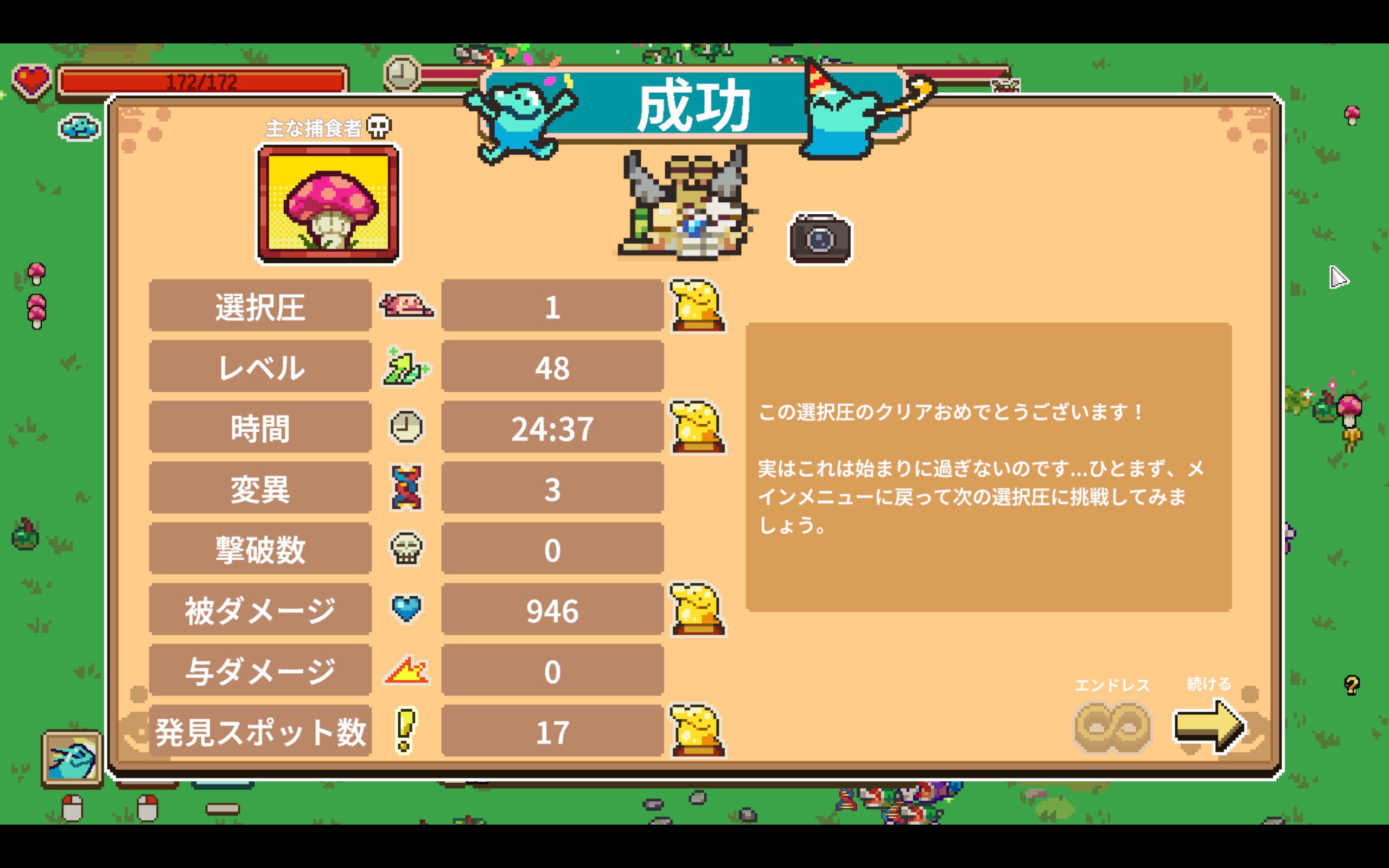
But after about five hours, the paper starts to feel very thin. The demo was fun. The full game, as far as I can tell, is the demo. The same four biomes (grass, desert, snow, water) with the same handful of enemies. The same five bosses you’ll face in every run. The same “pressure” system that just cranks enemy HP and damage numbers up while slapping debuffs on you, without introducing any meaningful new challenges or strategies. I’ve read better worldbuilding in a second-hand paperback. The game tells you it’s about adaptation, but there’s nothing to adapt to. The desert burns you, the tundra freezes you, but every other creature is immune, and there’s no real reward for venturing into those zones. So you just… stay in the grass. Every run.
And the runs blur together fast. There are supposedly 125+ evolutions, but in practice you’re cycling through the same handful of passives and attacks. Most builds funnel you into the same outcome: get big, stack HP and physical damage, hope you roll the right upgrades early. On higher difficulties (past Pressure 10), if you don’t find a speed upgrade or a decent attack in the first few minutes, you might as well restart. The game punishes you for restarting, too—it cuts your starting bonus if you don’t make it to the first boss. It’s a design choice that feels less like encouraging perseverance and more like punishing you for not enjoying the slot machine.
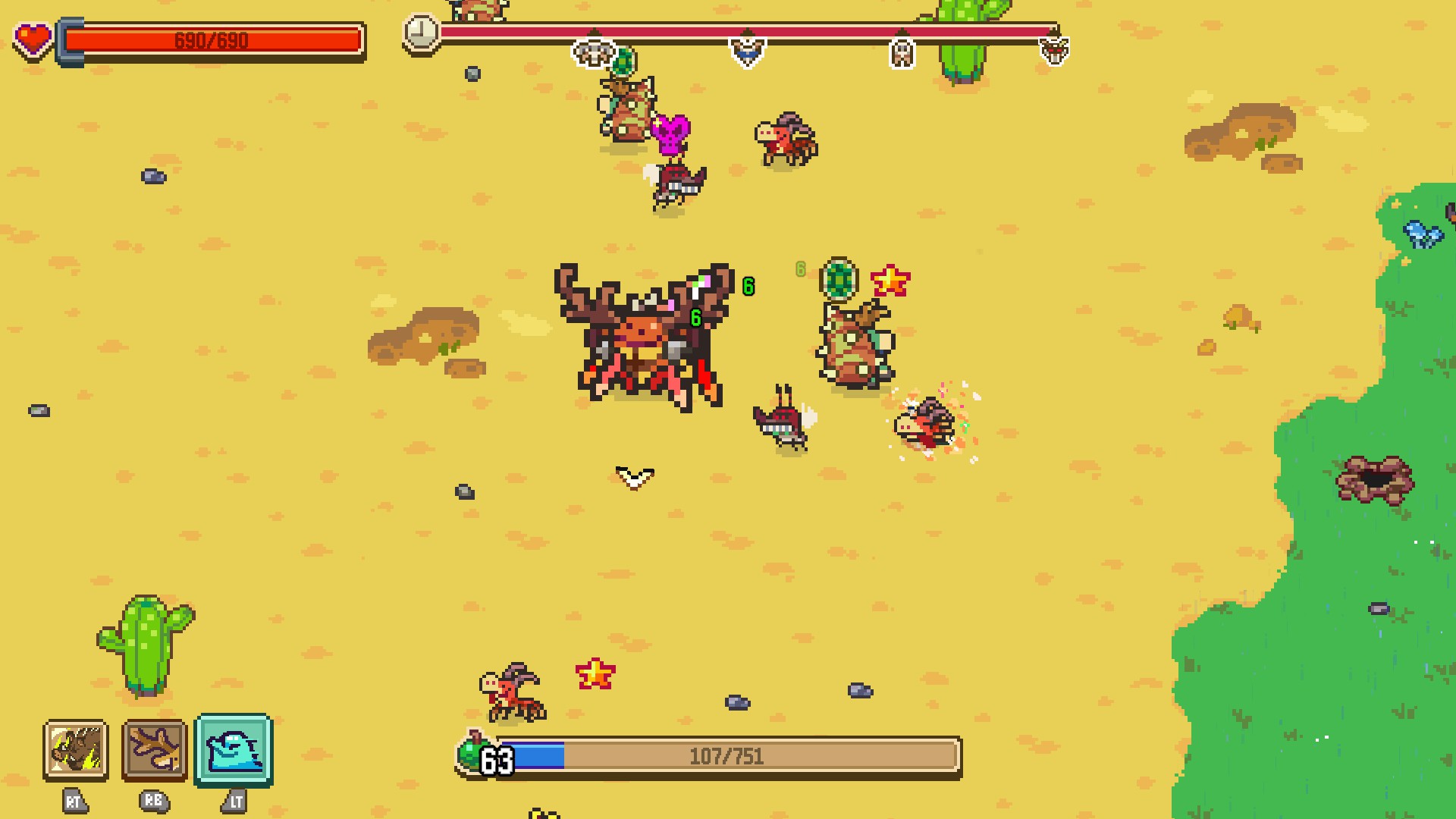
The balance is a mess. Some enemies—looking at you, Pantther—are absurdly overtuned. They spawn in packs, aggro you from off-screen, move faster than you, hit like trucks, and then flee at impossible speeds when they’re low on health, wasting your time. The Shellephant boss is a notorious run-ender, requiring you to kite it around a tree because its hitboxes are jank and your dodge is on cooldown. And don’t even get me started on burrows. You can only hide for a few seconds before you’re spat out, but enemies? They can camp in there indefinitely. The ecosystem does not play fair.
Then there’s the elephant in the terrarium: the developers are already talking about paid DLC, while the base game has placeholder UI elements that say COMING SOON. The “Infinite Mode,” which should be the sandbox payoff for your evolution experiments, is locked behind completing Pressure 10—a difficulty level that, by all accounts, is more about surviving RNG than skill. Players have had to mod the game just to unlock the mode at lower pressures. That’s not a feature; that’s a bug in the design philosophy.
Look, I’m not saying it’s a bad game. It’s not. It’s a fine game. For ten bucks, you’ll get a solid 10–15 hours of charming, mindless fun. If you’re new to the genre or just want something to play while watching a show, it scratches that itch. There are some genuinely clever ideas here—the way evolutions branch and lock each other out, the visual customization, the option to play pacifist and out-wait bosses. And the devs have shown willingness to patch and adjust, which is more than you can say for some AAA studios.
But in a market crowded with deep, replayable roguelites—Slay the Spire, Balatro, Binding of Isaac, Hades—good intentions and cute crabs aren’t enough. Everything is Crab feels like a beta masquerading as a 1.0 release. It runs well, the controls are responsive, and the performance is solid. I never had a crash or a stutter. But design-wise, it’s unfinished. The depth stops where the demo ended.
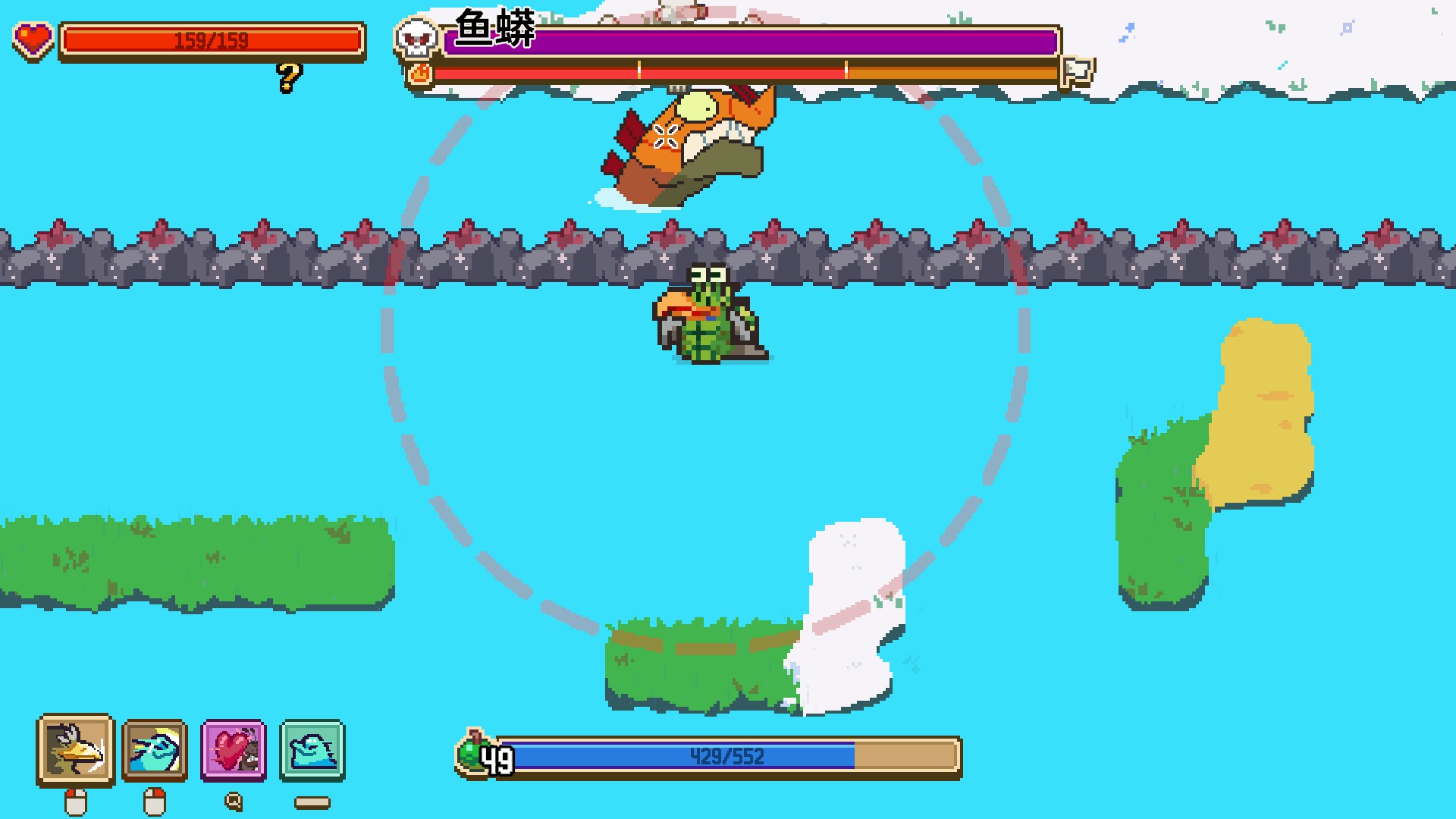
I wanted to love this game. I really did. I love the concept. I love the theme. I love the idea of a little blob evolving into a ridiculous chimera while facing a world of crabs. But the replayability just isn’t there yet. The runs feel samey after the first handful of hours. The enemy variety is thin. The biomes don’t matter. The boss fights are either trivial or unfair, with no middle ground. And the meta-progression—new evolutions, genetics, challenges—is gated behind a grind that feels designed to pad playtime rather than enhance it.
The most damning thing I can say is this: if you’ve played the demo, you’ve played the game. The full release adds a few evolutions and more difficulty levels, but the core experience is unchanged. That’s not a full game. That’s a demo with a price tag.
I’ll check back in a year. Maybe by then, the evolution will be complete.
Score: 6/10 — A charming but shallow roguelite that runs well but doesn’t run deep. Wait for a sale, or wait for more content. The crabs can wait.