Invincible VS: A Bloody Disappointment Wrapped in Potential
Here we are again. Another licensed fighting game struts onto the stage with the swagger of a superhero, promising brutal 3v3 tag action, a roster of fan-favorite characters, and the pedigree of former Killer Instinct developers. And what do we get? A game that feels like it shipped three quarters empty, held together with duct tape and bubblegum, asking for $50 like it’s the second coming of Ultimate Marvel vs. Capcom 3. I’ve been playing fighting games since the Atari 2600, and I’ve seen this movie before. It rarely has a happy ending.
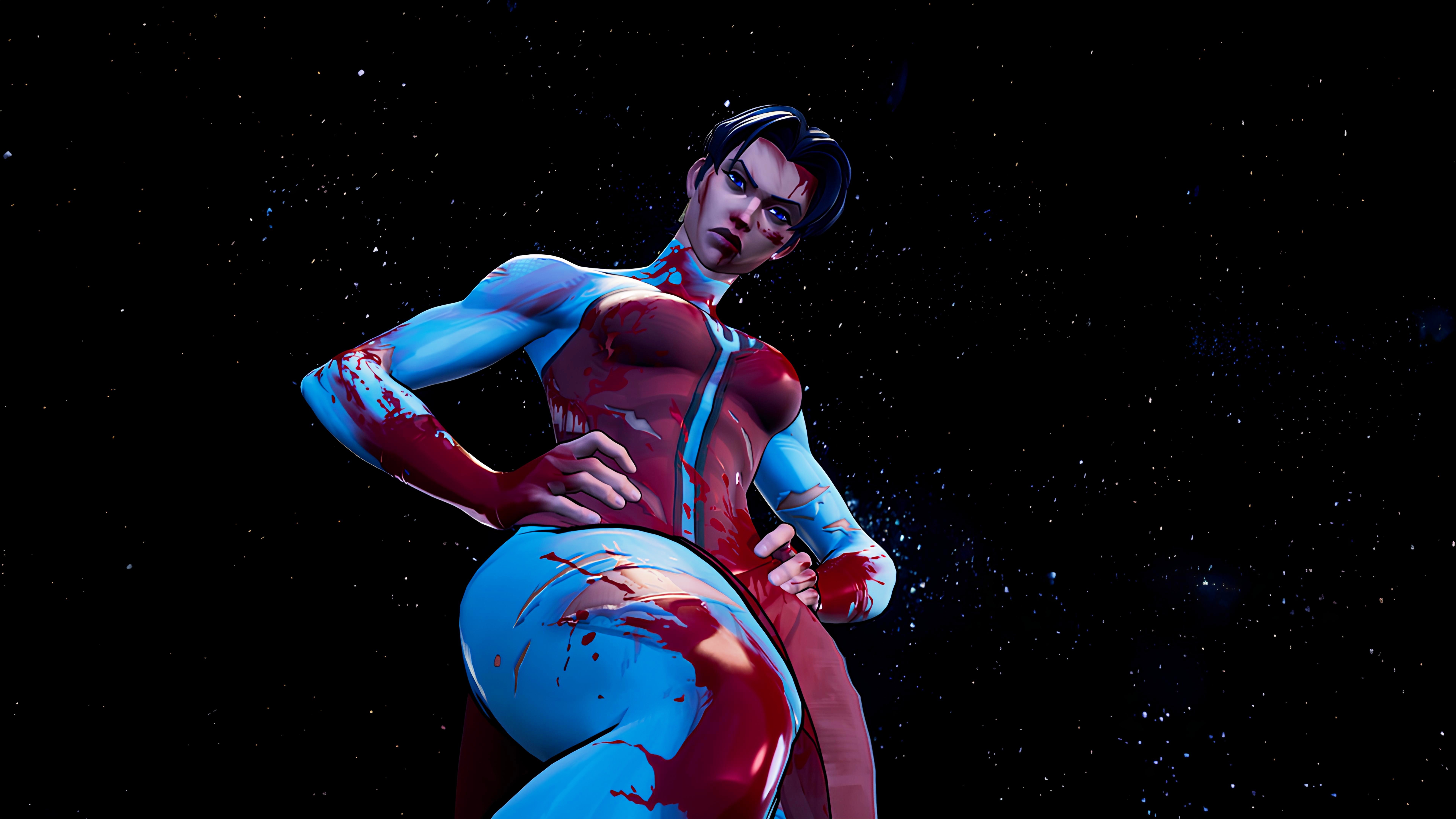
Let me be clear from the jump: the core combat loop in Invincible VS is genuinely fun. When it clicks—when you’re chaining together active tags, catching an opponent with a well-timed counter, and dumping meter into a brutal super—it captures that chaotic, improvisational energy that made the Marvel vs. Capcom series so addictive. The 3v3 tag system is fluid, the universal mechanics give every character a baseline of options, and the damage feels appropriately meaty. The voice acting is top-notch, with most of the show’s cast returning, and the art style captures the gory, kinetic energy of the source material. The tutorial is excellent, one of the best in the genre, teaching you everything from basic movement to advanced defensive options in a clear, no-nonsense fashion.
But here’s the thing about a house built on a good foundation: it still needs walls, a roof, and running water. Invincible VS has the foundation, and almost nothing else.
The single-player content is anemic to the point of embarrassment. The story mode clocks in at around an hour. An hour. For $50. It’s a competent little narrative, written by someone from the animated series, that feels like the opening chapter of a story that ends just as it gets interesting. Then there’s a cliffhanger. That’s it. No arcade mode with meaningful unlockables at launch—they patched in an endless arcade months later, but without leaderboards. No combo trials. No survival mode. No mini-games. A veteran gamer from the 80s who left a review suggested a Space Invaders-style mini-game with the Sequids, or a tower defense mode against the Flaxans. These aren’t unreasonable ideas. They’re the kind of thoughtful, low-cost content that used to ship with games as a matter of course. Instead, we get a $50 title that you can exhaust in a single evening.
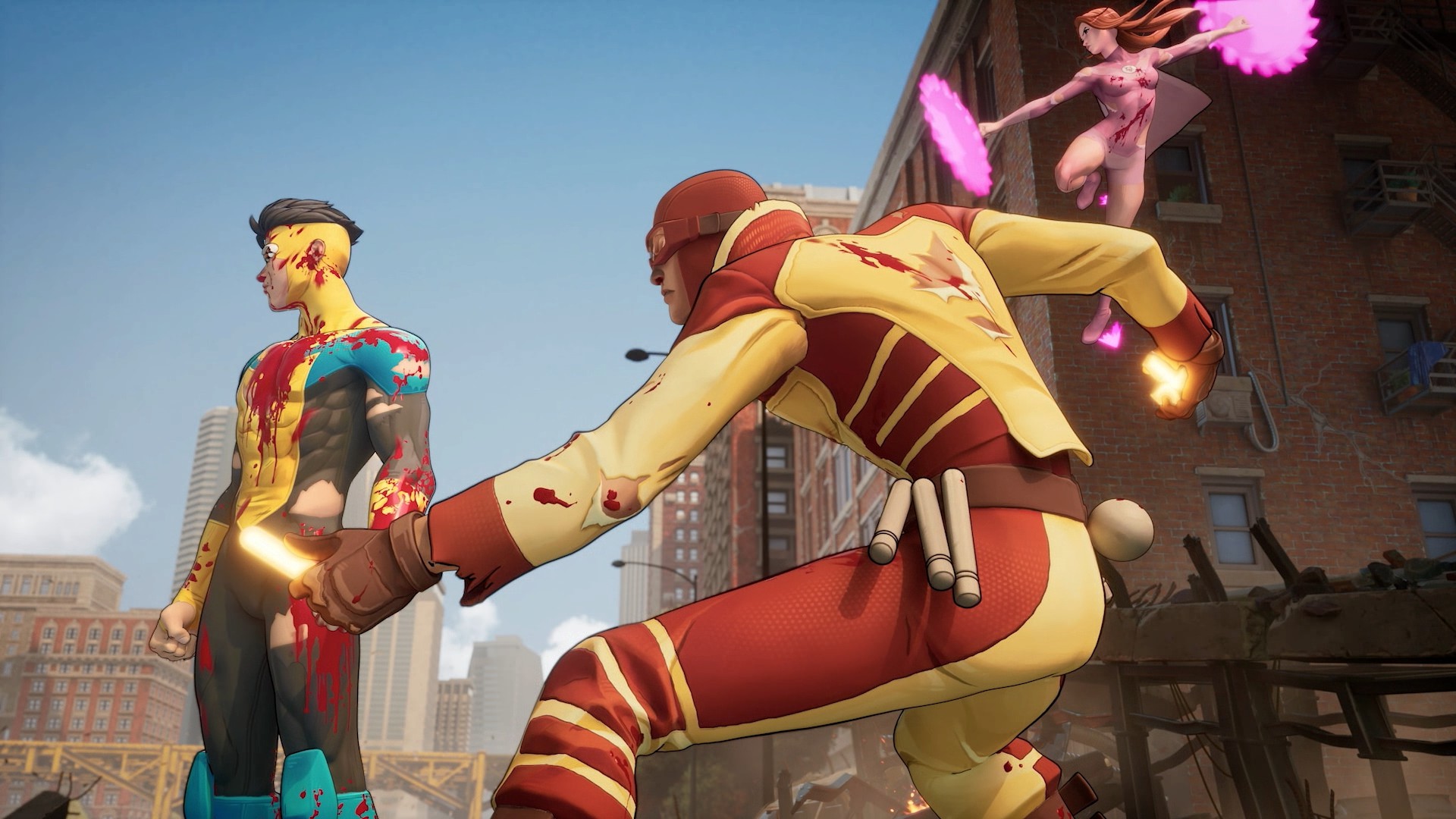
And then there’s the monetization. On day one, the game launched with over $60 worth of DLC skins. Individual costumes cost $10. Let me repeat that: $10 for a single skin in a game that already costs $50 and has almost nothing to do. The deluxe edition, which ran $70, didn’t even include these skins. This isn’t just greedy; it’s insulting. Back in my day, you unlocked alternate costumes by completing challenges or finding secrets. Now you get a brown recolor of Mark that looks like a well-done steak and are told to fork over another tenner. The game has 18 characters at launch, each with three special moves. That’s a perfectly workable roster for a 3v3 fighter, but when you’re recycling the same characters multiple times in arcade mode because there aren’t enough unique fighters, it starts to feel thin.
The online experience is where things go from disappointing to genuinely frustrating. The netcode is serviceable—not the worst I’ve seen, but far from the best. The bigger problem is the community and the matchmaking. Rage quitting is rampant, with no penalty whatsoever. You land a combo, kill their first character, and they disconnect. You get no win, they get no loss, and you’re sent back to the main menu. When you do find matches, you’re often paired against players thousands of points above or below you, leading to one-sided stomps or boring cakewalks. The matchmaking queue can stretch into minutes of staring at a screen. One reviewer quipped that they’ve read every book they own waiting for matches. I believe them.
But the real problem—the one that has tournament veterans and the game’s own #1 player declaring the game dead on stream—is the fundamental design of the combat system itself. On the surface, it’s a fast-paced tag fighter. But dig deeper, and you find a mess of contradictory mechanics that reward passive, unfun playstyles.
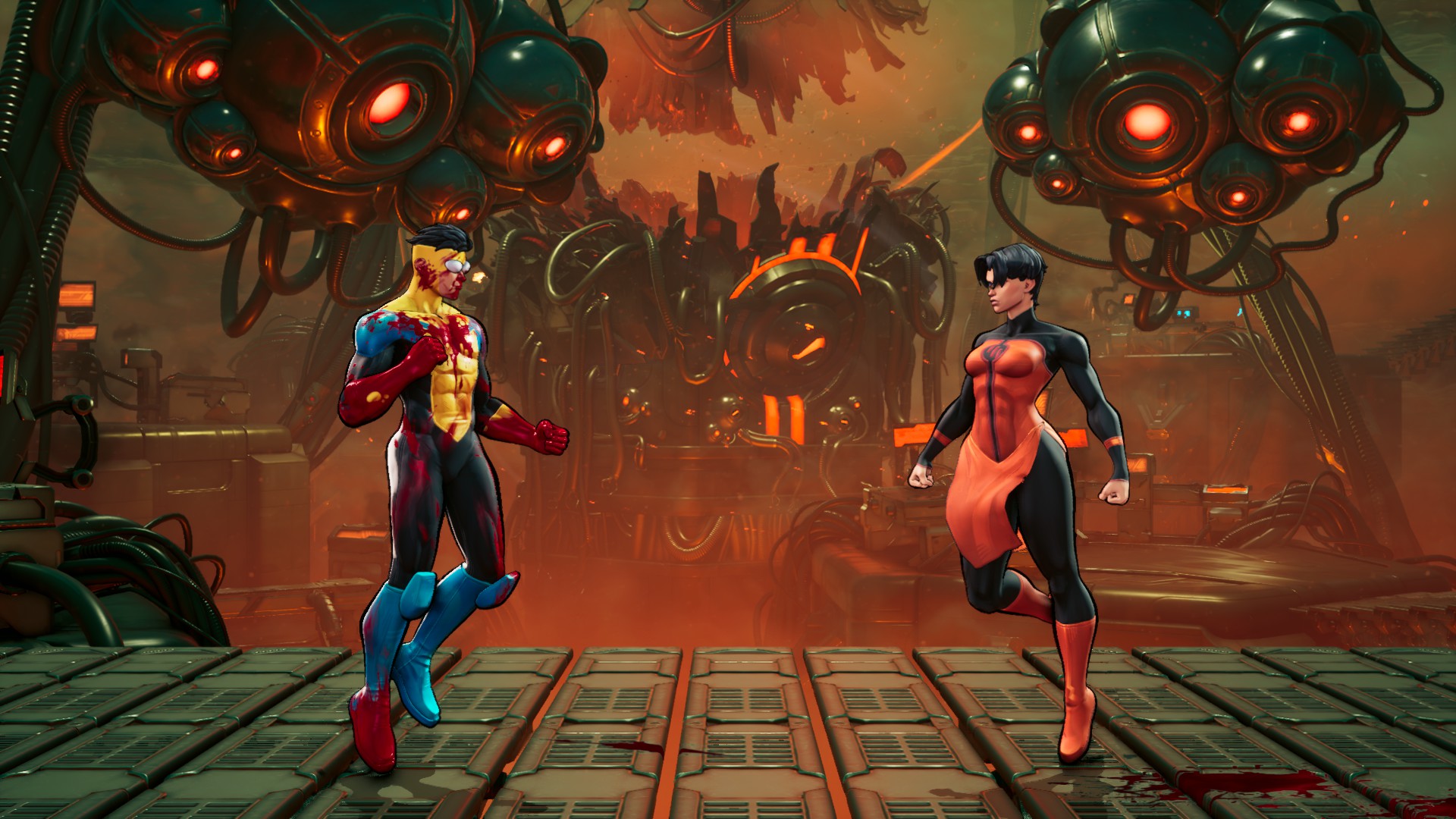
The burst mechanic is a disaster. If you block a burst, you’re at such a massive disadvantage that you’re better off just letting it hit you. The universal armored launcher that you can cancel blockstun into means that pressing an advantage is often a trap. Assist breakers are nearly free, so expect two out of every three hit confirms to get broken. And the assist system itself is busted: almost every character has an overhead assist, which means every blockstring becomes a guessing game of high-low that you can’t react to, only pray through. Tagging on block is completely free and plus on block, creating infinite blockstrings that the defender has no real way to escape except by guessing correctly on a tag break, which costs you health if you’re wrong.
And then there’s sudden death. When the timer runs out—which happens in most matches at higher levels, because defense is so strong and running away is so viable—the match becomes a one-round, sudden death scramble where you’re forced to use whatever character you were last controlling, regardless of their health. You can play a perfect match, outplay your opponent at every turn, and lose because they turtled with one character until the timer ran out and then landed a stray level 3 super. It’s the worst comeback mechanic I’ve seen in 40 years of playing this genre. It turns every match into a potential coin flip.

The motion input implementation is clearly an afterthought, with inputs that don’t match the tutorials and bizarre button mappings that punish you for trying to play the way traditional fighting game players prefer. The game is clearly designed for simplified controls, and the motion inputs exist only to check a box on a feature list. This isn’t the work of developers who don’t know how to make a fighting game—the Killer Instinct pedigree is evident in the combo system and resource management. It’s the work of developers who seem to have lost the thread somewhere between idea and execution.
I want to like this game. I really do. The IP is fantastic, the voice acting is superb, and when you’re just messing around with friends, it can be a blast. But as a competitive fighting game, it’s a mess. As a single-player experience, it’s a skeleton. As a value proposition, it’s a scam. The player base is already hemorrhaging, and with MARVEL Tōkon: Fighting Souls looming on the horizon, I don’t see Invincible VS surviving its first year with a healthy community.
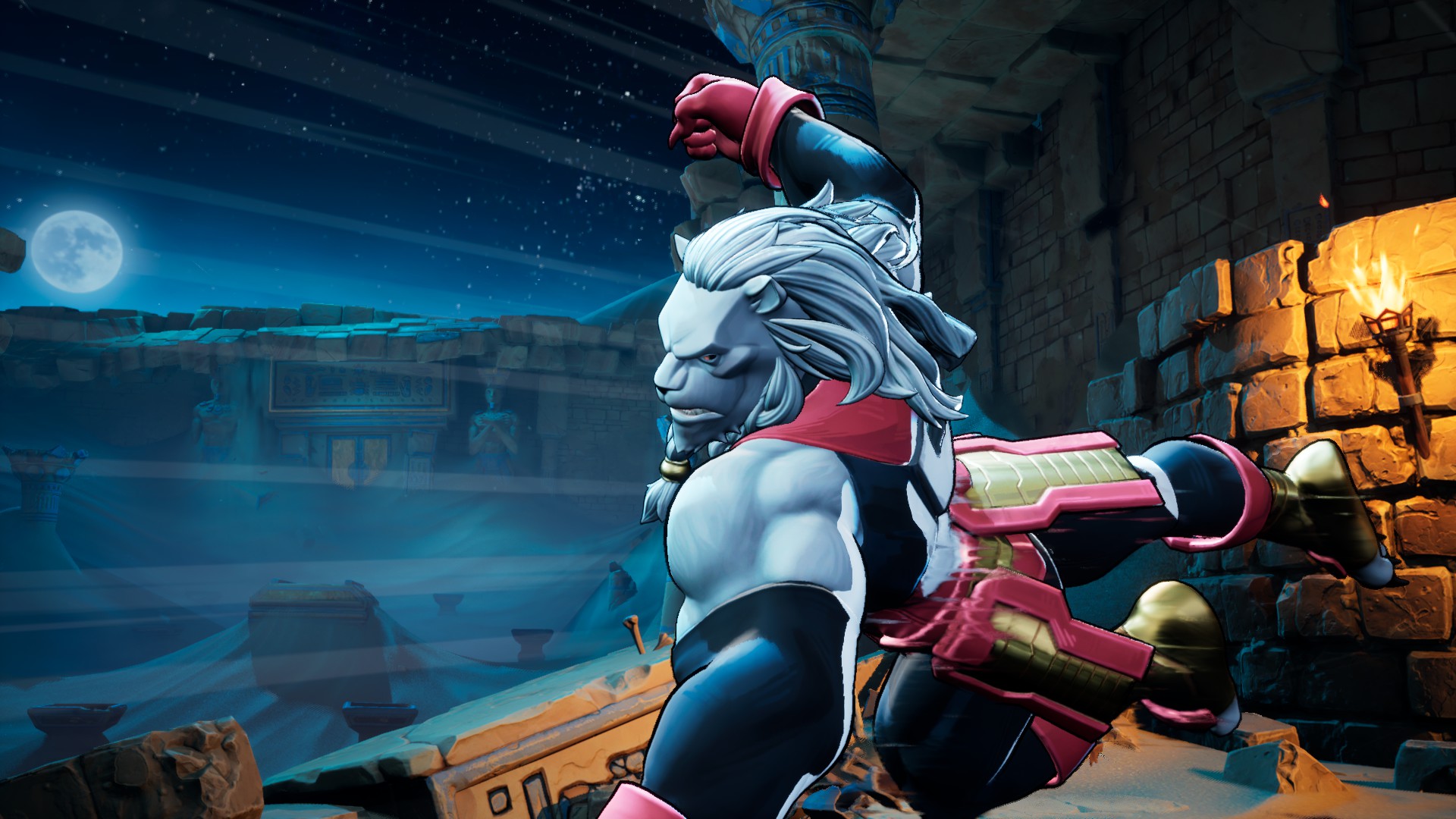
Maybe in a year, after several major patches, a price drop, and a deluge of free content, this will be the game it should have been at launch. But I can’t recommend you spend $50 on potential. That’s not how this works. That’s not how any of this works. Save your money. Buy Dragon Ball FighterZ on sale. Reinstall UMVC3. Dust off your old PS2 and play some Capcom vs. SNK 2. Come back to Invincible VS in six months and see if it’s still breathing. I’ll be here, sipping my coffee, reading a good book while I wait for the next match to queue.