Motorslice: A Beautiful, Frustrating Climb
There’s a particular ache that comes with wanting to love a game that just won’t let you. Motorslice, the debut from Brazilian developer Regular Studio, is a game of towering ambition and maddening inconsistency. It wears its influences on its sleeve—Shadow of the Colossus’s scale, Mirror’s Edge’s parkour, and a dollop of Nier Automata’s melancholic slice-of-life—but stumbles over its own mechanics at nearly every turn. After spending a dozen hours scaling its brutalist megastructure, I’m left with a feeling not unlike the protagonist, P, trudging through sand: tired, a little dirty, but strangely satisfied I made it to the top.
The premise is simple: you are a Slicer, a freelance machine-killer, dropped into an impossibly vast megastructure with a chainsaw and a floating camera drone named Orbie. Your mission? Ascend, destroy every piece of hostile construction equipment, and get out. The story that unfolds is deliberately vague, told through optional “slack off” cutscenes where P chats with Orbie. These scenes are charming in a low-key way—P is a bored, tomboyish tsundere, voiced with perfect deadpan by Kira Buckland—but the worldbuilding is almost nonexistent. Terms like “The Silent War” and “Alpha Structure” are tossed out like candy, but they never coalesce into anything meaningful. The ending, a cliffhanger, feels less like a tease and more like a shrug. I’ve read better lore on a bar napkin.
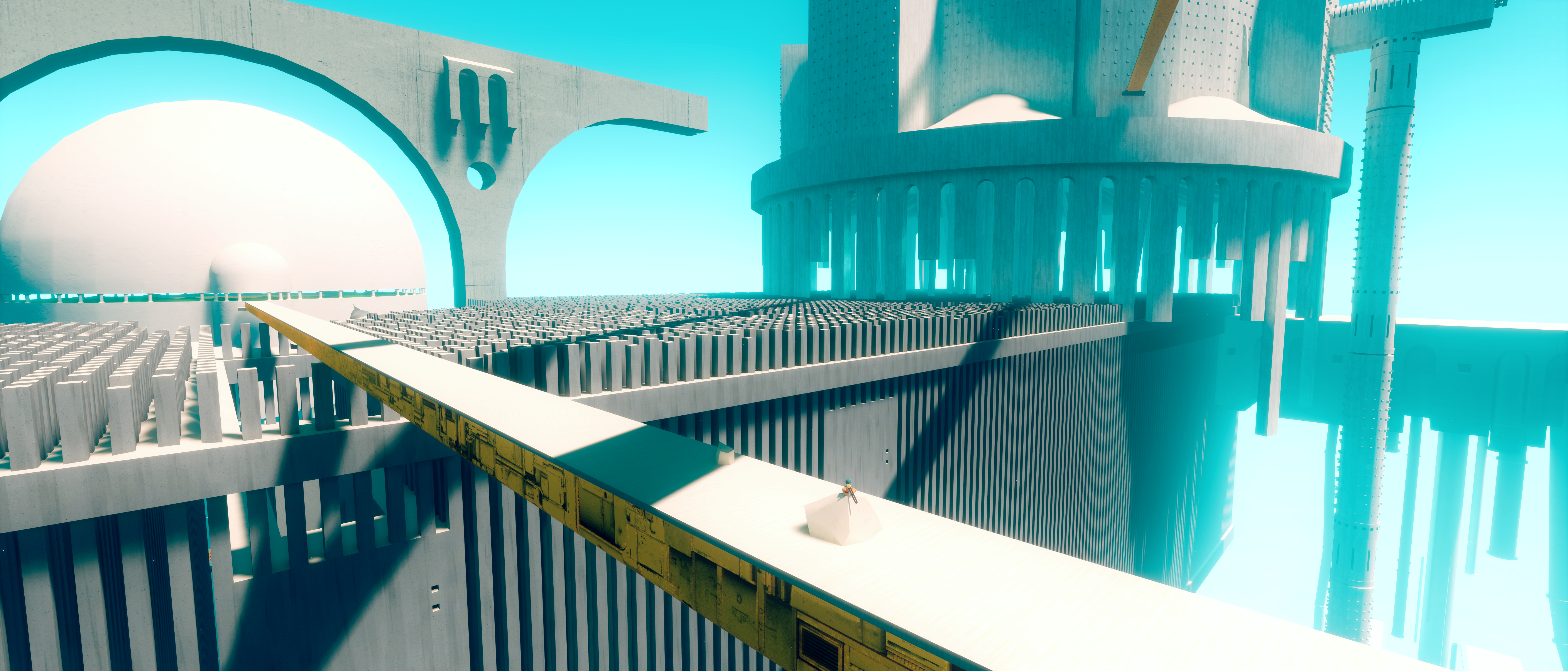
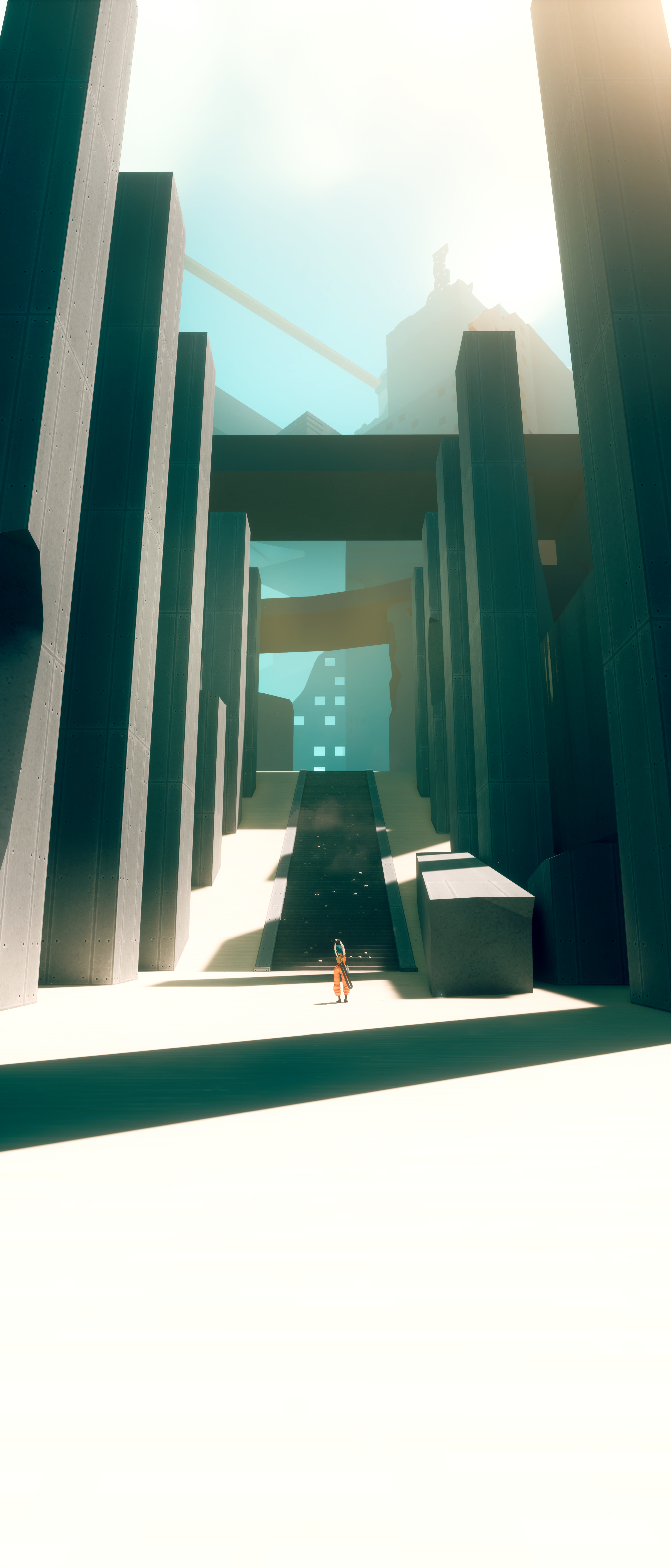
Where Motorslice truly shines is in its atmosphere. The art direction is a masterclass in low-poly bleakness: endless corridors of gray concrete, rusted pipes, and blinding orange sunsets that stretch across a dead desert. The game loads its entire world into memory, so you can look up and see the platforms you’ll be climbing an hour from now, or look down and spot the bosses you’ve already turned to dust. It’s a staggering sense of scale that few games achieve, and it makes every step upward feel earned. The soundtrack, a thrumming DnB/jungle score by Pizza Hotline, fits the mood perfectly—pulsing and urgent during combat, sparse and echoing during exploration. It’s the kind of music that makes you want to run, even when the controls are fighting you.
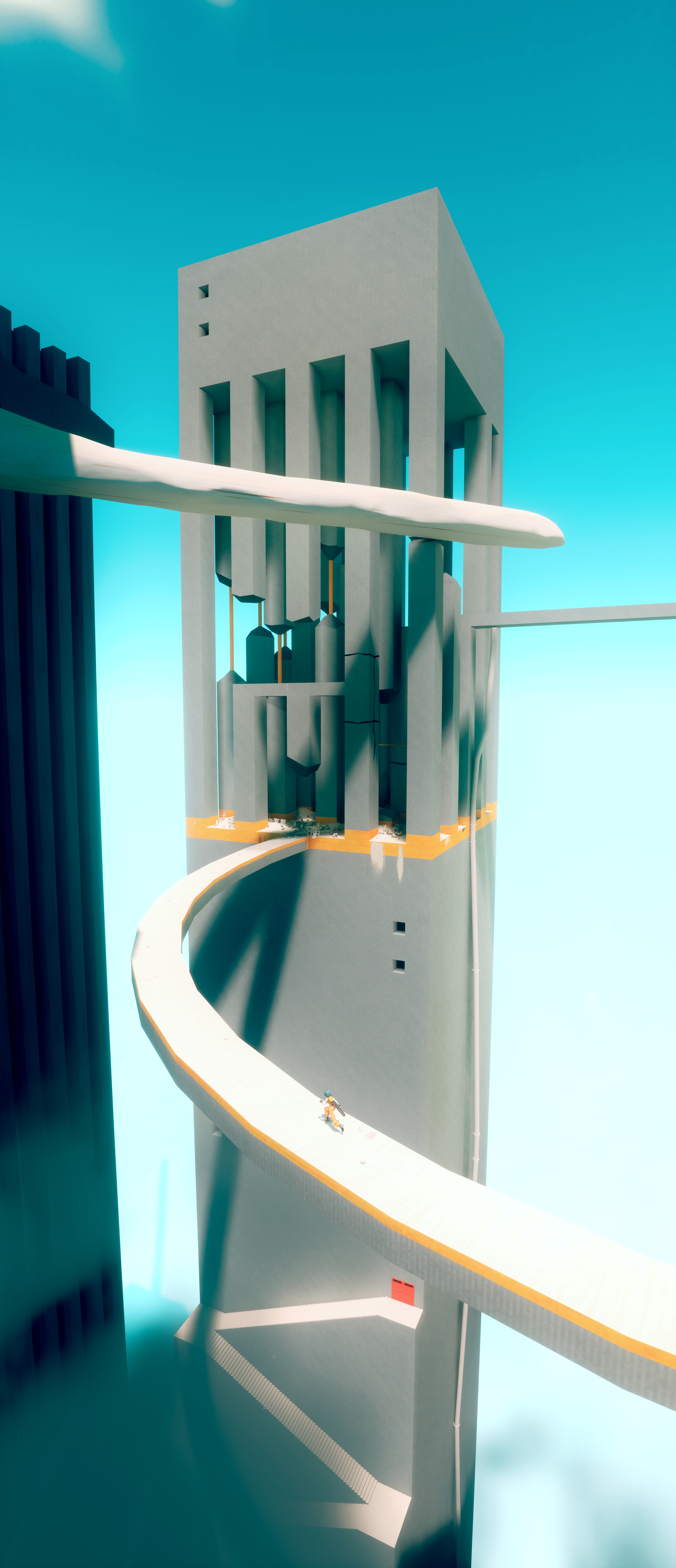
And fight you they will. The parkour is the game’s core, and when it works, it’s a joy. P can run, slide, vault, wall-run, wall-jump, swing on poles, and—the marquee move—motorslice, which lets her plant her chainsaw into metal surfaces and ride them like a rail. The flow state is real: chaining a wall-run into a slide into a jump into a motorslice across a gap feels like liquid motion. But that flow is constantly shattered by clunky input detection. The game struggles to distinguish between a wall-run and a wall-climb, often sending P careening off a ledge when you meant to scurry up. The camera, controlled by Orbie, is a neat diegetic touch—you can blink to clear dust, and P will react if you smack her with it—but in practice, it’s too zoomed in and prone to flipping at the worst moments. I died more times from the game misreading my intentions than from actual challenge.
The motorslicing mechanic is the biggest offender. Changing direction mid-slice—a requirement in later levels—requires you to stop, re-angle P in the air, and re-engage. It’s clunky, imprecise, and in tight corridors, it’s a death sentence. One reviewer described it as a “coin flip,” and that’s generous. I lost count of how many times I tried to slice upward and went sideways into a grinder instead. The game does have generous checkpoints, which softens the blow, but when you’re failing a section for the tenth time because the controls won’t cooperate, generosity feels like pity.
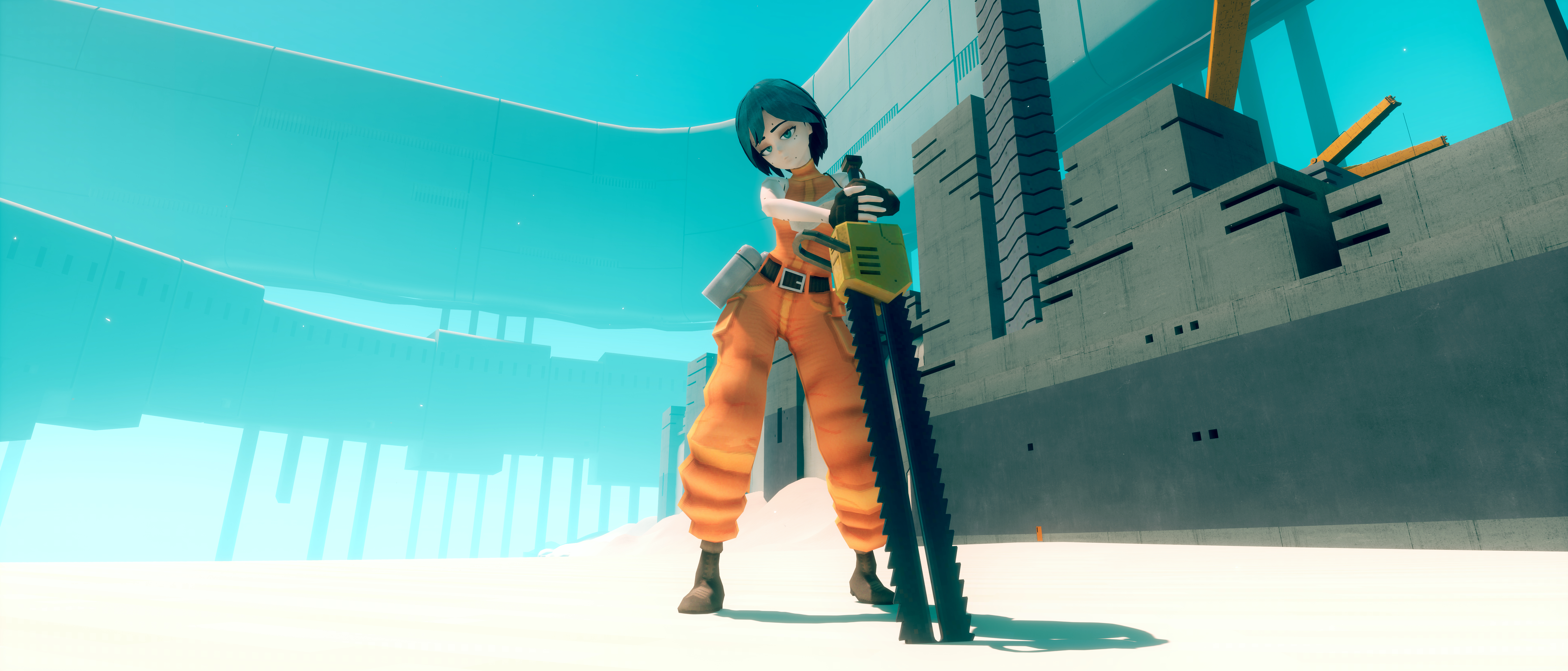
Combat is simple to the point of being an afterthought. There are only three enemy types: a ground-based roller, a floating saw-shooter, and a steamroller. All die in one or two hits. Parrying is available but barely necessary; the timing is generous enough that you can cheese most encounters. The bosses, however, are the highlight. Each chapter ends with a colossal machine—a dump truck, an excavator, a drill rig—that you must scale, parkour-style, and slice apart. They’re visually imposing and mechanically interesting, but they’re over too quickly. Once you figure out the climbing puzzle, the boss is essentially done. They don’t fight back once you’re on them, and the fights lack the desperate, scrappy energy of Shadow of the Colossus. Still, the spectacle is undeniable. Watching a building-sized bulldozer crumble as you leap from its cab is a rush.
Then there’s the elephant in the room: the fanservice. P is an undeniably cute character, but the game’s obsession with her body is exhausting. The “slack off” scenes, meant to build character, instead linger on her feet, her armpits, her cleavage. The dialogue options for Orbie are a binary between “professional” and “desperate gooner,” with no middle ground. You can make P make the ahegao face in selfie mode. There’s an achievement for poking her until she quits the game. It’s all optional, but it’s so pervasive that it colors the entire experience. It feels like the developers spent more time polishing P’s jiggle physics than the wall-running. For every player who finds it charming, another will find it creepy. I landed somewhere in the middle: amused at first, then weary. It’s a shame, because when the game lets P just be a tired, sarcastic worker with a chainsaw, she’s genuinely endearing.
Performance is a mixed bag. On an RTX 3070, I hovered around 90-120 FPS at max settings, but Unreal Engine 5’s stuttering is present, especially when loading new areas. The Steam Deck chugs in later chapters, and the lack of DLSS or FSR is a notable omission. The game is also prone to the occasional softlock or checkpoint quirk—I once respawned in an earlier chapter after dying, losing an hour of progress. It’s not game-breaking, but it’s frustrating.
At its best, Motorslice is a beautiful, lonely, and thrilling climb. Its sense of scale is unmatched, its music is a banger, and its protagonist has genuine spark. At its worst, it’s a janky, frustrating, and occasionally embarrassing experience that feels like it needed another six months in the oven. I can’t recommend it blindly, but I can’t dismiss it either. If you have a high tolerance for jank, a love of parkour, and the ability to ignore the weird foot stuff, there’s a great game here. If not, wait for a sale—and maybe a patch or two.
I finished it. I 100%ed the achievements. I think about the view from the top more than I think about the deaths. That has to count for something.