Outbound: A Cozy Shell Game
I remember when a game shipped complete. You paid your money, you got a full experience—story, mechanics, polish, the works. Outbound is not that game. It’s a beautifully wrapped box with a brick inside. The demo promised a solar-punk road trip, a mobile base, and the quiet joy of sustainable living. The full release delivers a repetitive grind loop, a world that feels like a post-apocalyptic ghost town, and enough design missteps to make me wish I’d spent the afternoon reading a second-hand paperback instead.
Let’s start with what works, because there is a glimmer of something here. The art style is genuinely pleasant. Rolling hills, wind turbines, and a color palette that screams “solar punk utopia” are all present. The first map, a lush forest region, is lovely to cruise through. The van handles smoothly, and the modular building system—snapping floors, walls, and decorations onto your vehicle—is intuitive. The sound of rain on the roof, the crackle of a campfire? That’s cozy. But cozy only gets you so far when the entire gameplay loop is “drive 30 seconds, stop, collect three logs, run out of stamina, drive another 30 seconds, repeat.”
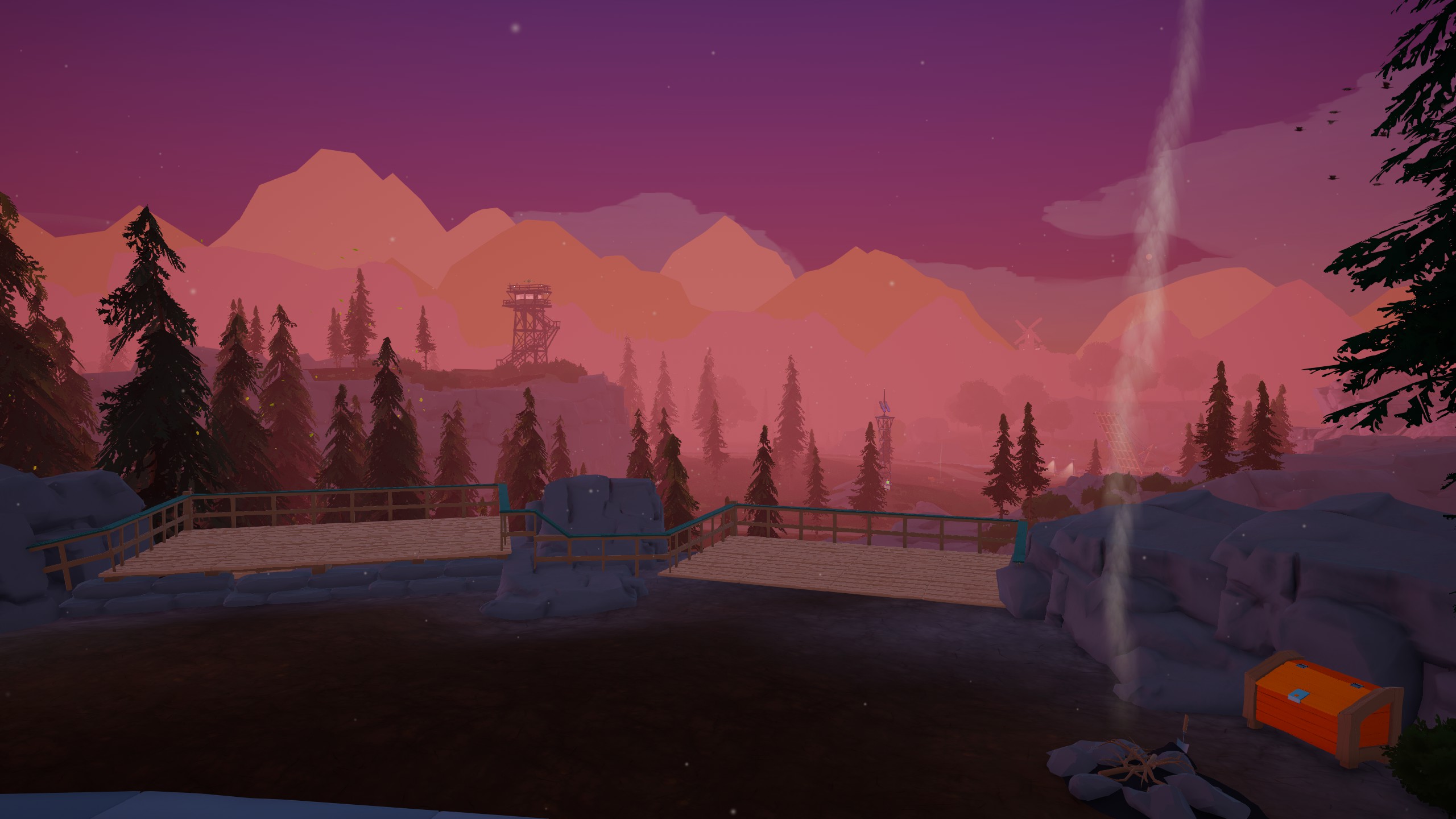
The view is nice. Shame you’ll spend most of your time staring at your inventory screen.
The core problem is that Outbound doesn’t know what it wants to be. It tries to be a relaxing exploration game, a survival-lite resource manager, and a mobile base builder all at once—and it fails at all three. There’s no story to speak of. Everyone has apparently gone to some festival, leaving behind empty houses and cryptic notes. The world feels abandoned in a deeply unsettling way, more like a walking sim set in the aftermath of a plague than a cozy camping trip. You’ll see the same “festival” NPCs—lifeless player models doing two dance loops—in the final zone. It’s depressing, not cozy.
Resource gathering is the beating heart of any crafting game, and Outbound’s heart is arrhythmic. You’ll need wood for everything. Wood is found in pitifully small piles scattered across the map. You cannot chop down trees. You cannot mine into cliffs. You just pick up detritus. Scrap metal? Only in a few spots per biome. Fiber? Run back to the starting area. The game has no fast travel between maps—you have to slowly, painfully drive back through every previous area if you forgot to stock up. That’s not exploration, that’s a chore. Back in my day, we called this padding. Now we call it “content.”
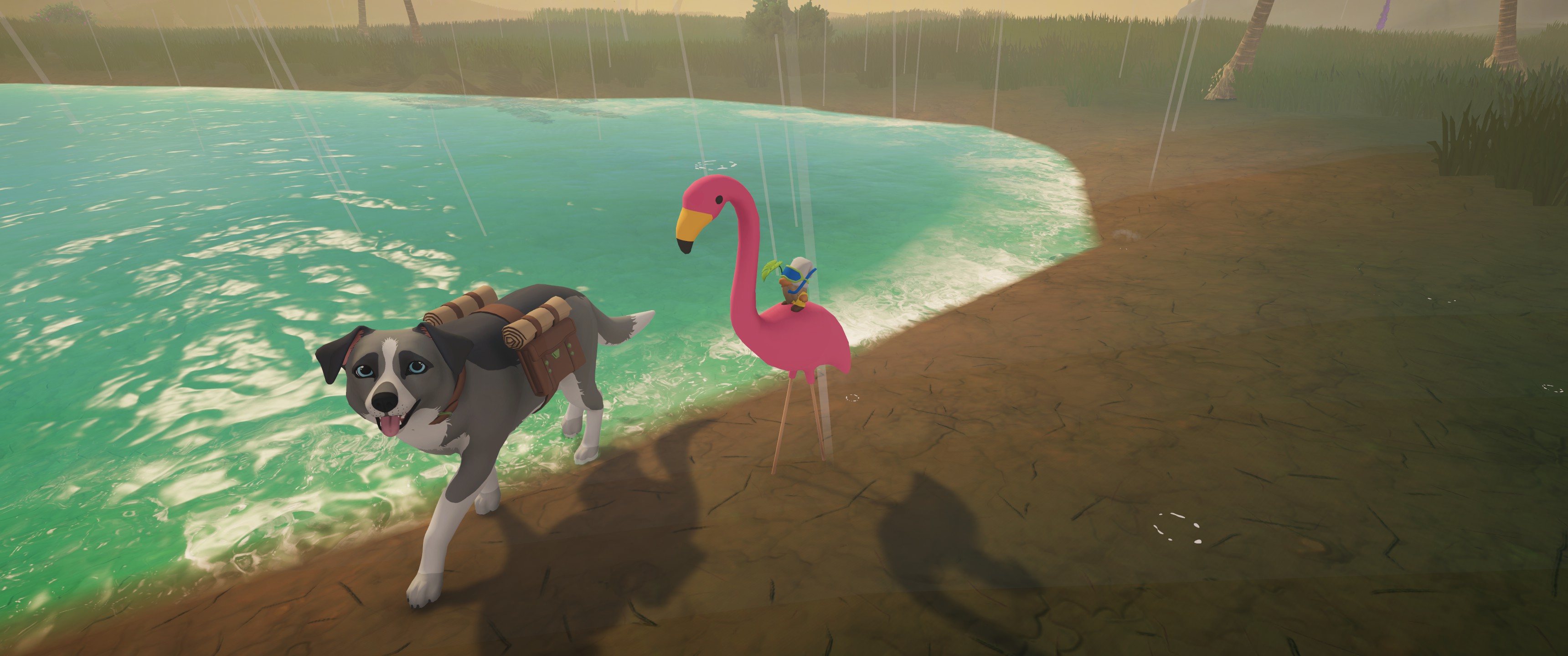
Ah, the wood pile. You’ll come to hate these tiny, insufficient clusters.
The blueprint system is a special kind of cruel. You find radio towers that let you choose one of three random blueprints. Need a sewing table to upgrade your backpack? Too bad, the tower gave you three different decorative gnome patterns. Want a better axe? Hope you get lucky next time—and that next time isn’t on the opposite side of the map. This randomisation of essential progression is maddening. You can waste hours driving back and forth, unlocking furniture instead of tools you actually need. And when you finally get a research station upgrade, you have to spend more resources to even craft the thing you just researched. It’s a double-dip that feels like the developers are mocking you.
The dog companion is cute but almost useless. It gets stuck on geometry, its pathfinding is worse than a Roomba with a concussion, and its initial 10-slot inventory is a joke. There’s an upgrade that lets it automatically send items to the van, but by the time you unlock that, you’ll already have van storage up the wazoo. The dog is a checkbox feature, not a meaningful partner.
Crafting stations are absurdly numerous. You’ll need a separate machine for wood planks, another for metal sheets, another for circuits, another for batteries, another for cooking, another for juicing… it goes on. Half a dozen stations could easily be merged into one or two. Instead, you’re forced to build a miniature factory on top of your van. The weight limit on the vehicle only compounds the problem. And the food system? Completely pointless. Raw berries give almost as much nutrition as elaborate cooked meals, and there’s no buff system. Why bother building a stove when you can just eat a handful of blueberries? Fishing was added as an update, but you can’t cook the fish. You can only put them in a glass tank to watch them spin in place like paper cutouts.
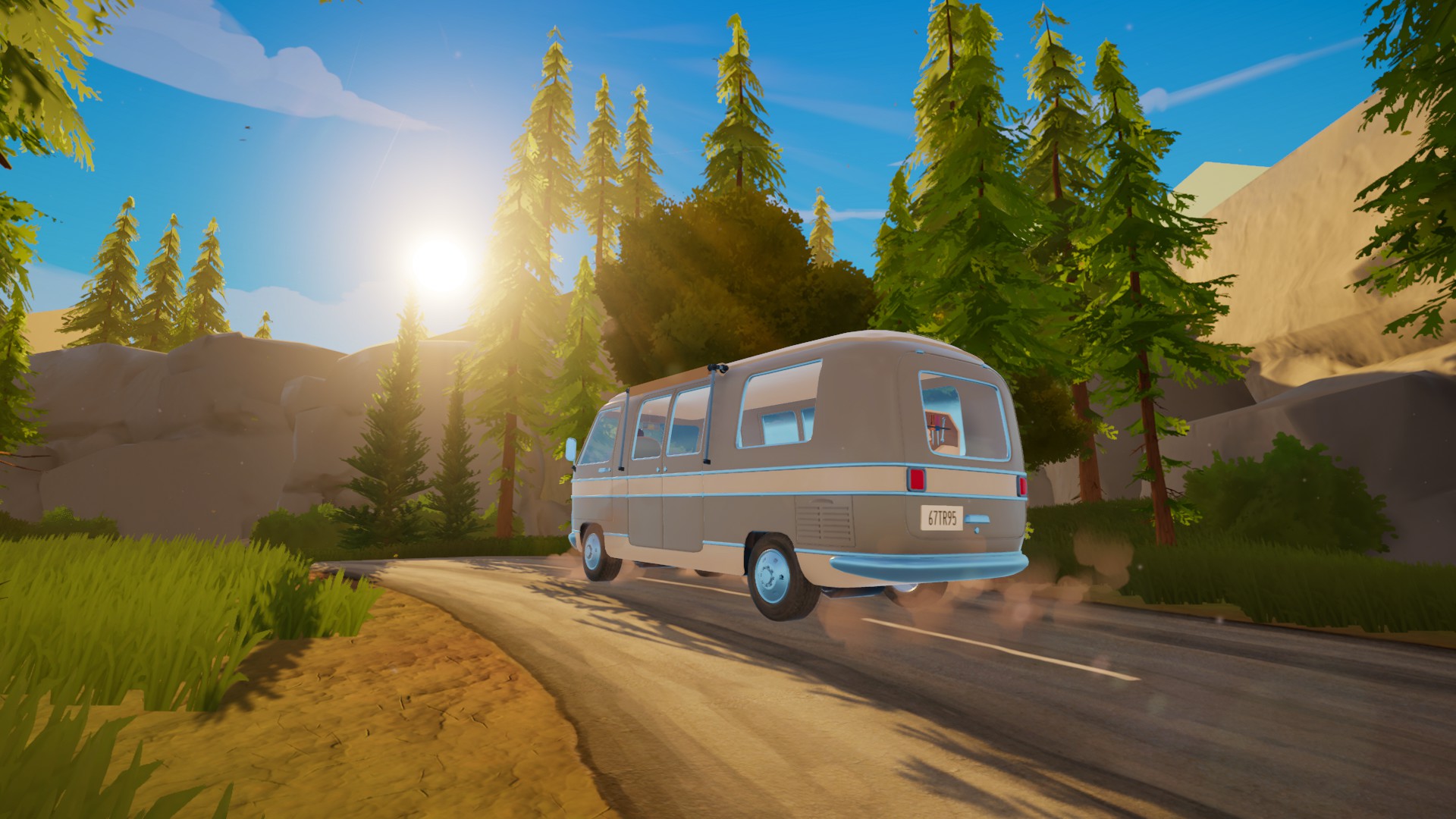
Workshop, kitchen, bedroom, and bathroom all in one tiny van. Cozy? Or claustrophobic?
The van itself is a source of frustration. Motor upgrades don’t actually make you faster—they just let you climb steeper hills that previously had invisible walls. The van’s headlights are so dim they make night driving worse. The energy system (solar, wind, water) is mostly irrelevant because you’re constantly driving and can’t deploy them on the move. You’ll rely on burning wood to charge your battery, which means more grinding. The whole loop is a treadmill designed to eat your time, not your boredom.
Performance is another black eye. For a game that looks like a mid-tier Unity project, it runs surprisingly poorly. Stutters, frame drops, and occasional crashes are common. On Steam Deck, you’ll be lucky to hold 30 FPS at medium settings. Multiplayer is even worse: rubberbanding, desync, falling through the world, and a host of cosmetic bugs like floating vans and T-posing characters. The developers have been responsive with patches, but the game should not have launched in this state. It feels like an Early Access title sold at full price—and with a paid DLC on day one. That’s not a good look.
Some players will find peace in Outbound’s aimlessness. If you want a screensaver you can occasionally interact with, this might scratch an itch. But for anyone expecting a fulfilling game with purpose, progression, or even a simple narrative thread, this is a letdown. I’ve read better worldbuilding in a discarded fantasy novel. I’ve played better base-building in games from a decade ago. Outbound is a pretty shell with nothing inside. It’s not broken beyond repair—the roadmap shows promise—but right now, it’s not worth the asking price. Wait for a deep sale, and even then, temper your expectations.
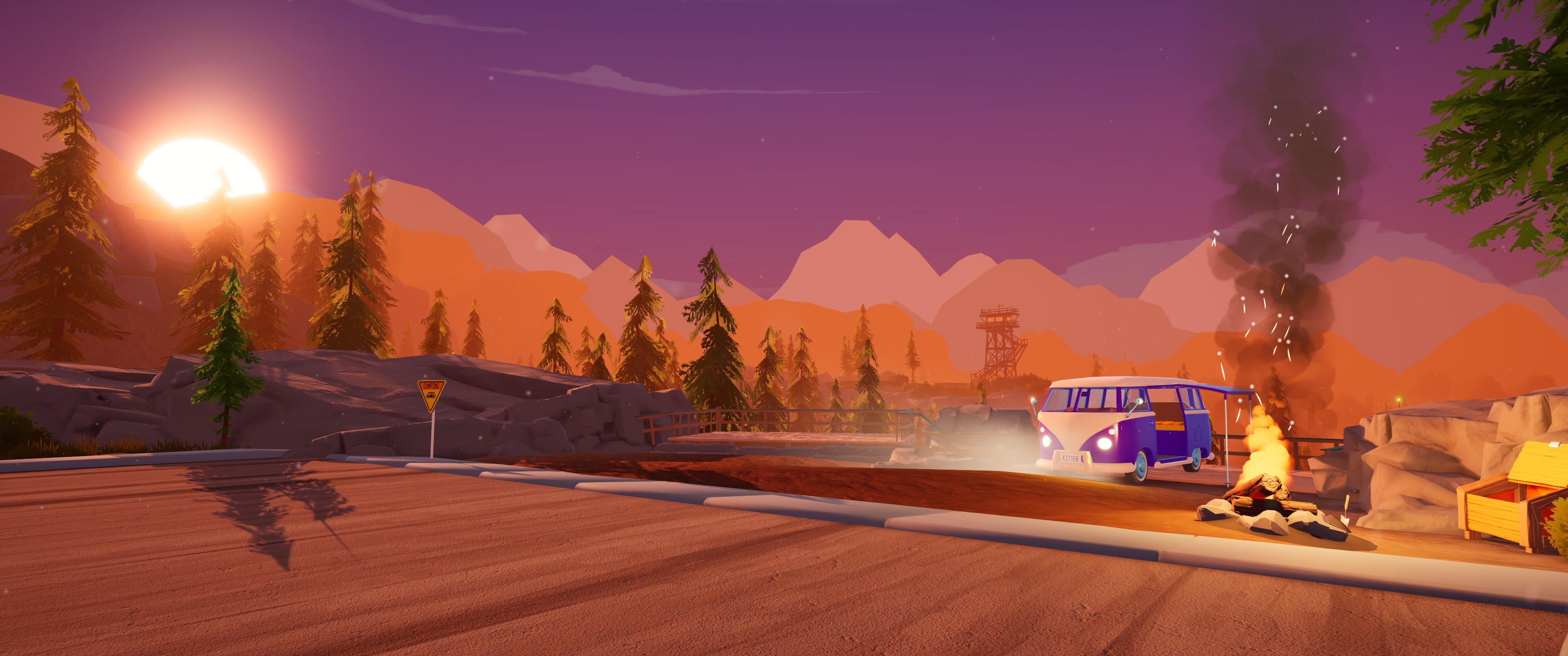
A rare moment of peace before the next chore.
In the end, Outbound is a game that had potential and squandered it on bad pacing, arbitrary gates, and a refusal to commit to its own cozy identity. I wanted to love it. I really did. Instead, I just feel tired. And at my age, I don’t have time for games that waste it.