Pass the Fear: A Bullet Hell That Craves a Balance Patch
I remember when roguelites were about careful resource management and the slow burn of incremental power. Now they’re all about exponential numbers, screen-filling projectiles, and builds that break the game before the final boss can even load its attack animation. Pass the Fear is a textbook example of that modern breed—a twin-stick bullet-hell that’s fun in bursts, but leaves you sighing into your coffee at the missed opportunities.
The core loop is solid: you’re a demon hunter trapped on an island after some Witch’s Disaster, and you have twelve hours to escape. The story is, to put it kindly, incomprehensible. I’ve read better lore on a bar napkin. The voice acting is weak (and in Chinese, which might be a plus if you like that, but the English text is decent). The music is forgettable—I couldn’t hum a single track after four hours. But you’re not here for a narrative. You’re here to grab guns, relics, and tarot cards, and turn yourself into a walking apocalypse.
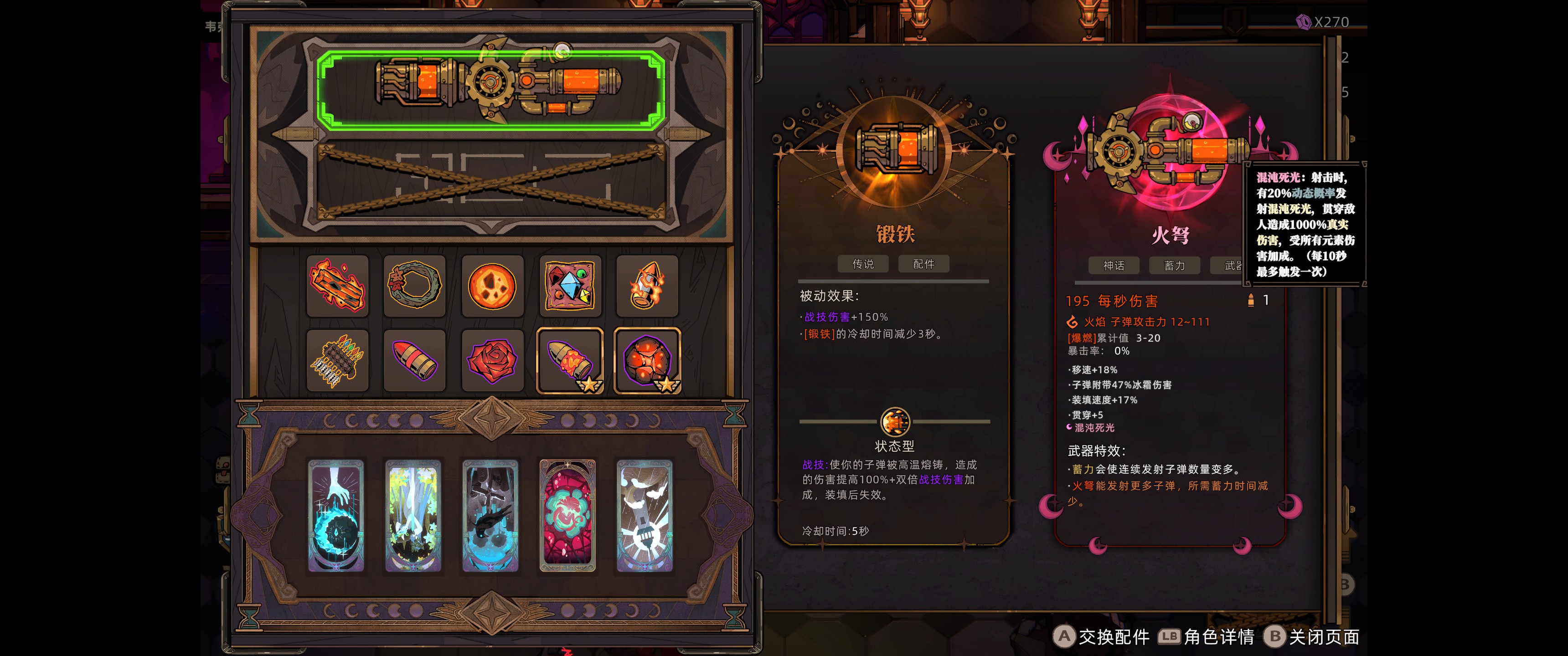
And that part works, mostly. The game offers a huge variety of weapons (pistols, shotguns, flamethrowers, weird flower-guns that shoot petals), each with an attachable barrel that adds a secondary ability. You have ten relic slots, a tarot card system that modifies runs, and meta-progression trees for both characters and a shared pool. The buildcrafting is the star. When you find the right synergies—say, an “embarkation” relic that triggers when you enter a room, a “destination” relic that fires on room clear, and a card that makes one trigger the other—you can sit in a room and watch your damage skyrocket to billions. There’s a genuine thrill in watching a fragile early-game character turn into a god that one-shots bosses before they can even attack.
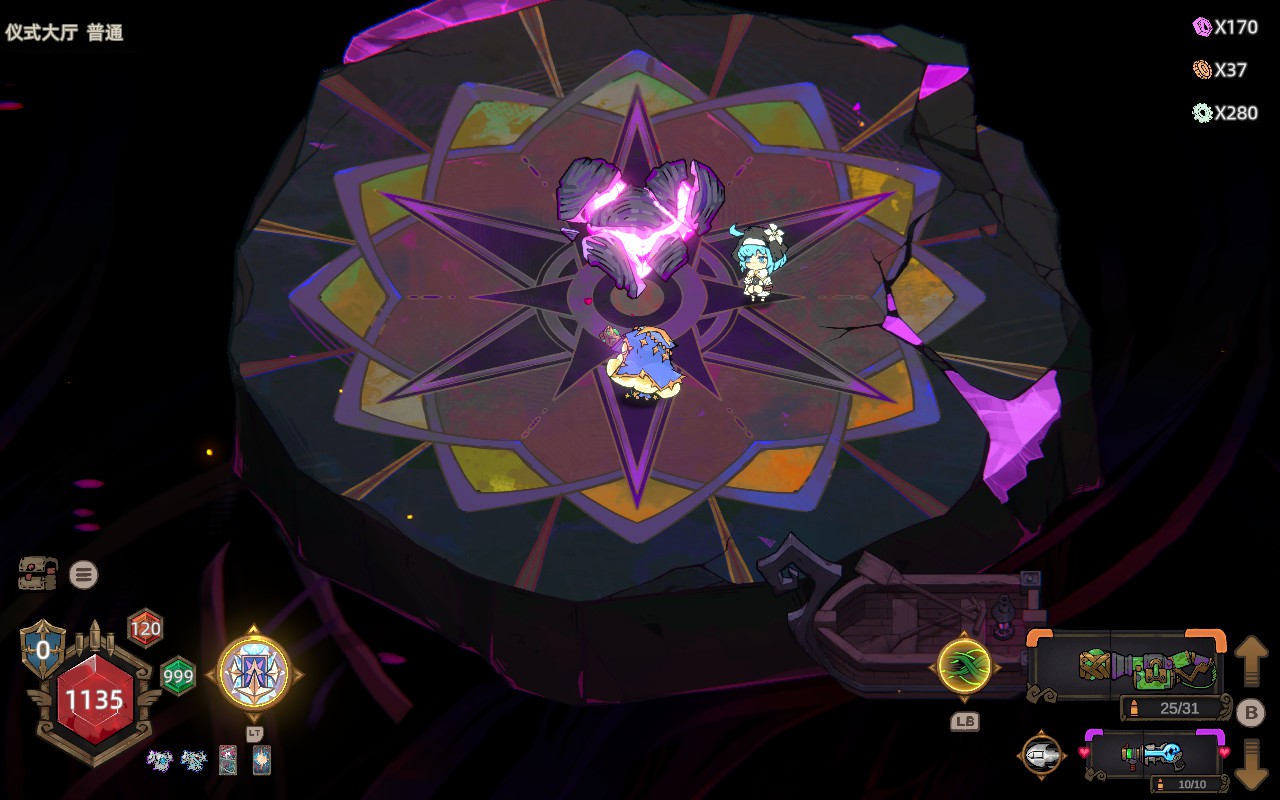
But that thrill comes with a price. The balance is all over the place. Physical damage builds utterly dominate; acid and lightning are laughably weak. A few legendary relics (Heart of Termination, Mask of Slaughter) trivialize the hardest difficulty, while half the gun roster is so bad you’d never touch them. Meanwhile, the game’s best weapons are locked behind absurdly low drop rates—I saw one Dominator in twenty runs on max difficulty. That’s not a challenge, that’s a slot machine with bad odds.
The difficulty curve is a mess. The first few acts are a gentle introduction. Then the middle acts spike hard—enemies become bullet-sponges that fill the screen with purple projectiles, and your health bar evaporates if you stand still for a second. Then, if you survive that, the final acts become a joke because your build has finally come together and you’re melting everything. The final boss usually dies in one or two phases without ever getting a chance to show off its attack patterns. That’s not satisfying; that’s anticlimactic. Some players reported that patches have smoothed this out, but on my playthrough it was still lopsided.
Co-op is a highlight. You can play with friends, swap items, revive each other, and quit mid-run to continue later—a feature I wish more games had. But performance issues rear their head: lag if the host is far away, desyncs, and on Steam Deck the framerate tanks hard once your build starts spewing hundreds of projectiles. The console/controller support is there, but some default binds are baffling (why is dodge on A?). And the stats screen is woefully inadequate—it doesn’t show your current health as a number, doesn’t display proc chances, and makes it hard to compare elemental damage boosts. For a game that’s all about numbers, that’s a cardinal sin.
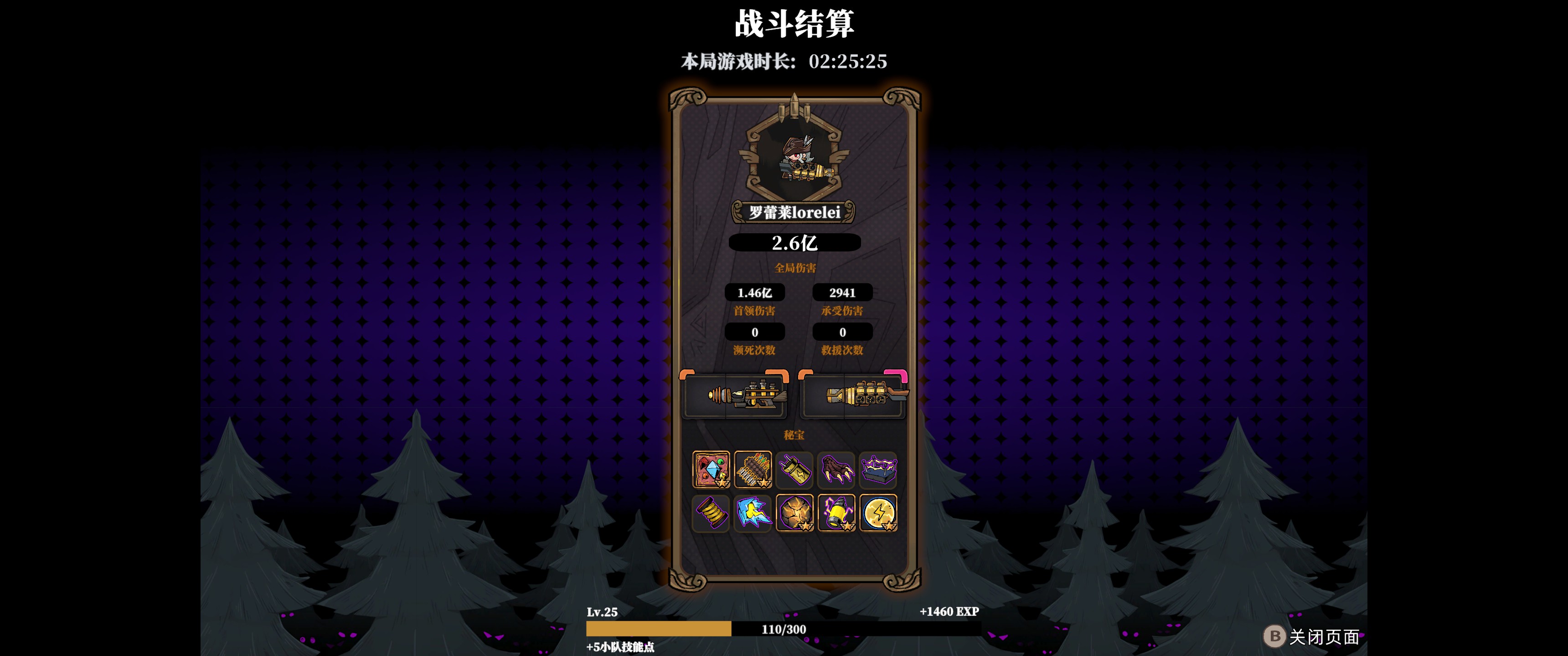
Content-wise, you can blow through all difficulties in under fifteen hours. The bosses are well-designed (great art, interesting patterns), but you face the same ones in the same order every run. The enemy variety is thin: most just walk toward you shooting, or teleport and do an AoE. The tarot cards have a few duds, and the Chaos Battle Scar modifiers on higher difficulties often feel like they just nerf you without offering interesting trade-offs. It screams “early access” even though it’s a full release.
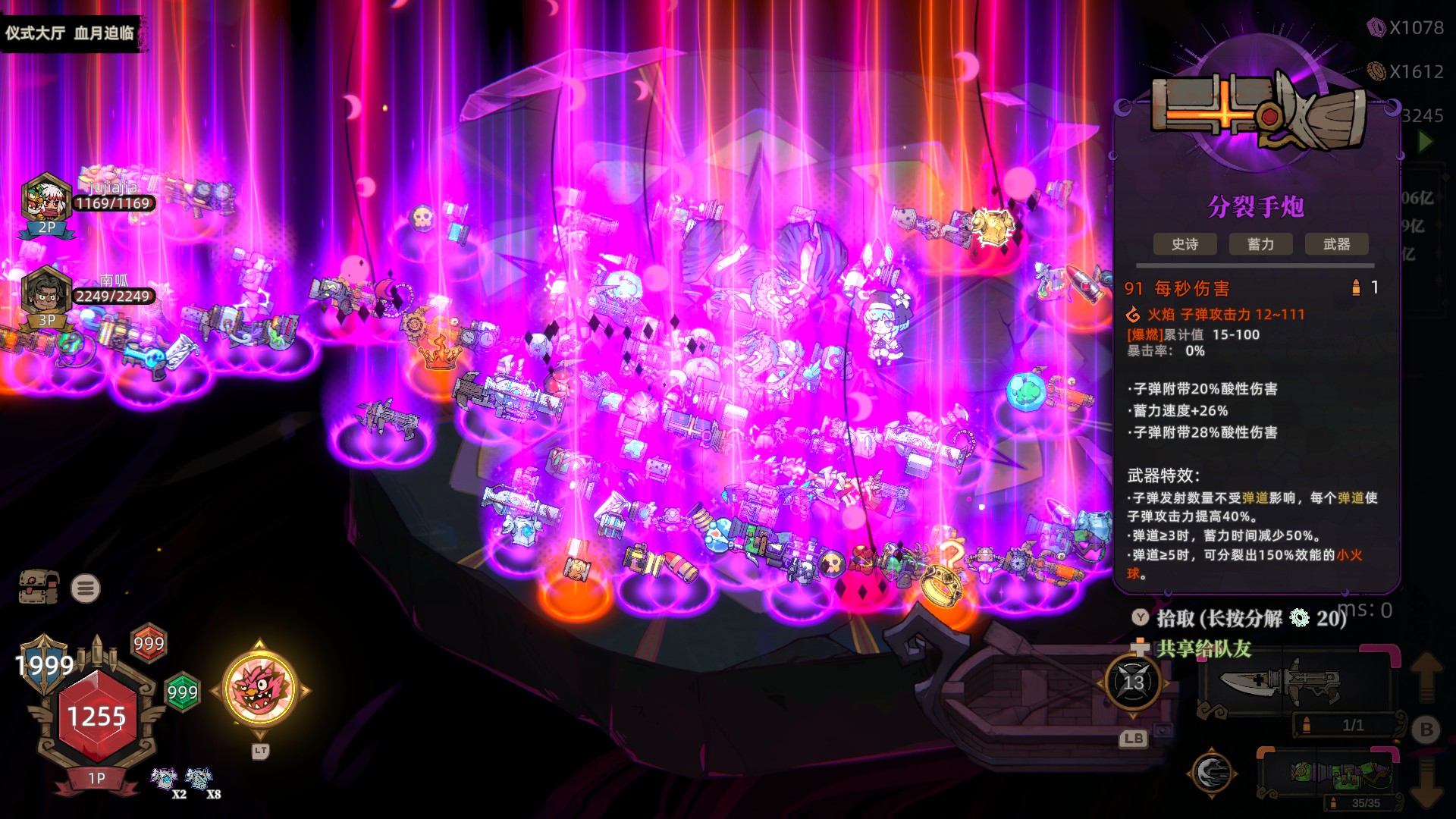
Despite all that, I kept playing. There’s a compulsive “one more run” energy here. The moment you hit that broken build—when your screen turns into a fireworks display and you see damage numbers in the billions—you forget the jank and grin. The art style is genuinely lovely, with detailed character designs and vibrant spell effects. The boss fights, when you don’t one-shot them, are tense and require real dodging skill. The auto-aim toggle helps newcomers, and the manual aim gives veterans control.
Pass the Fear is a game of extremes. When it works, it’s a 9/10. When it doesn’t, it’s a 6. It’s not the next Hades or Binding of Isaac. It’s a solid entry in a crowded genre that would benefit enormously from a balance patch, better UI, and more varied content. If you go in expecting a sandbox to break, you’ll have a blast. If you want a tight, fair challenge, you might feel cheated. I’d wait for a sale, or until the devs tighten the screws. As it stands, it’s a promising foundation that needs a lot more polish.
Score: 7/10