Retro Rewind: A Nostalgic Video Store Fantasy with a Short Rental Period
I remember when renting a movie meant getting in your car, driving to a brightly lit store, and spending twenty minutes walking the aisles reading the backs of boxes. That ritual, the smell of popcorn and stale carpet, the thrill of finding the last copy of a new release—it’s a piece of culture that’s gone the way of the dodo. Retro Rewind tries to bottle that feeling, and for a while, it succeeds brilliantly. But like a well-worn VHS tape, the picture gets fuzzy the longer you watch.
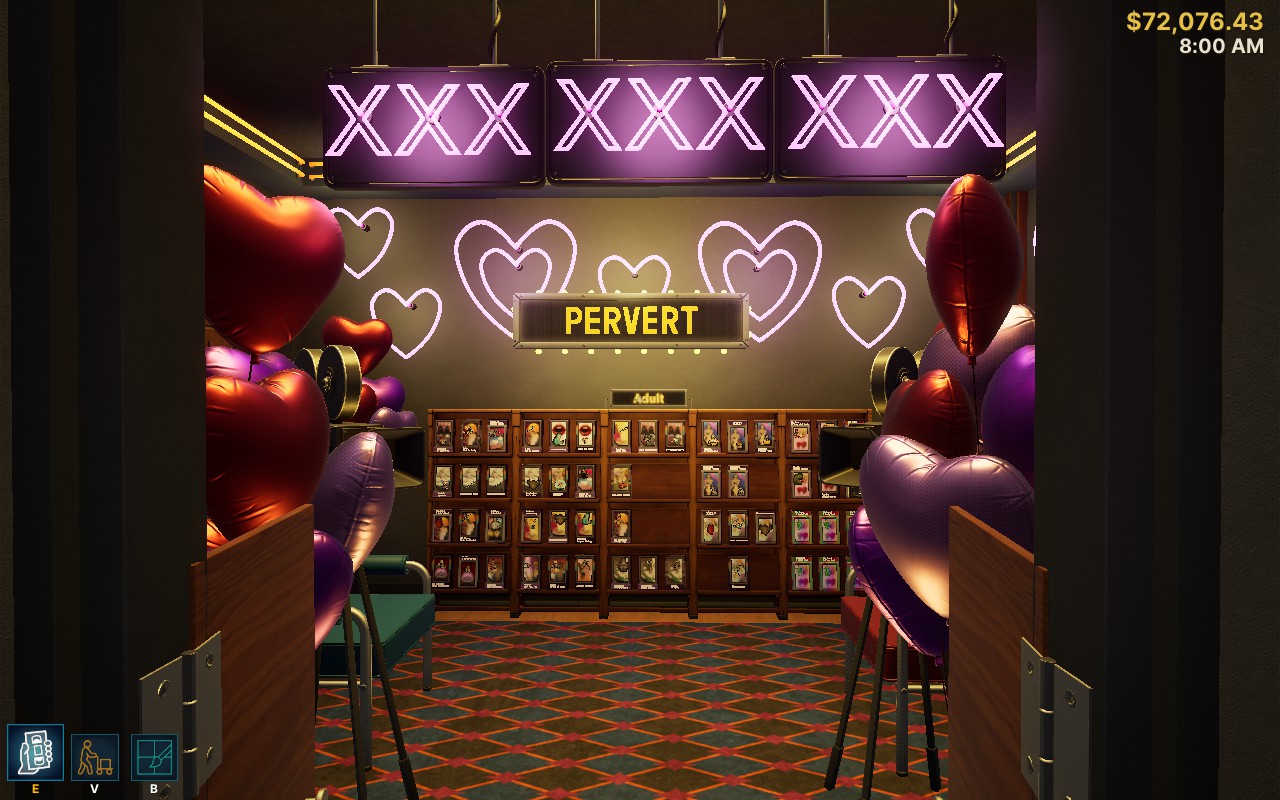
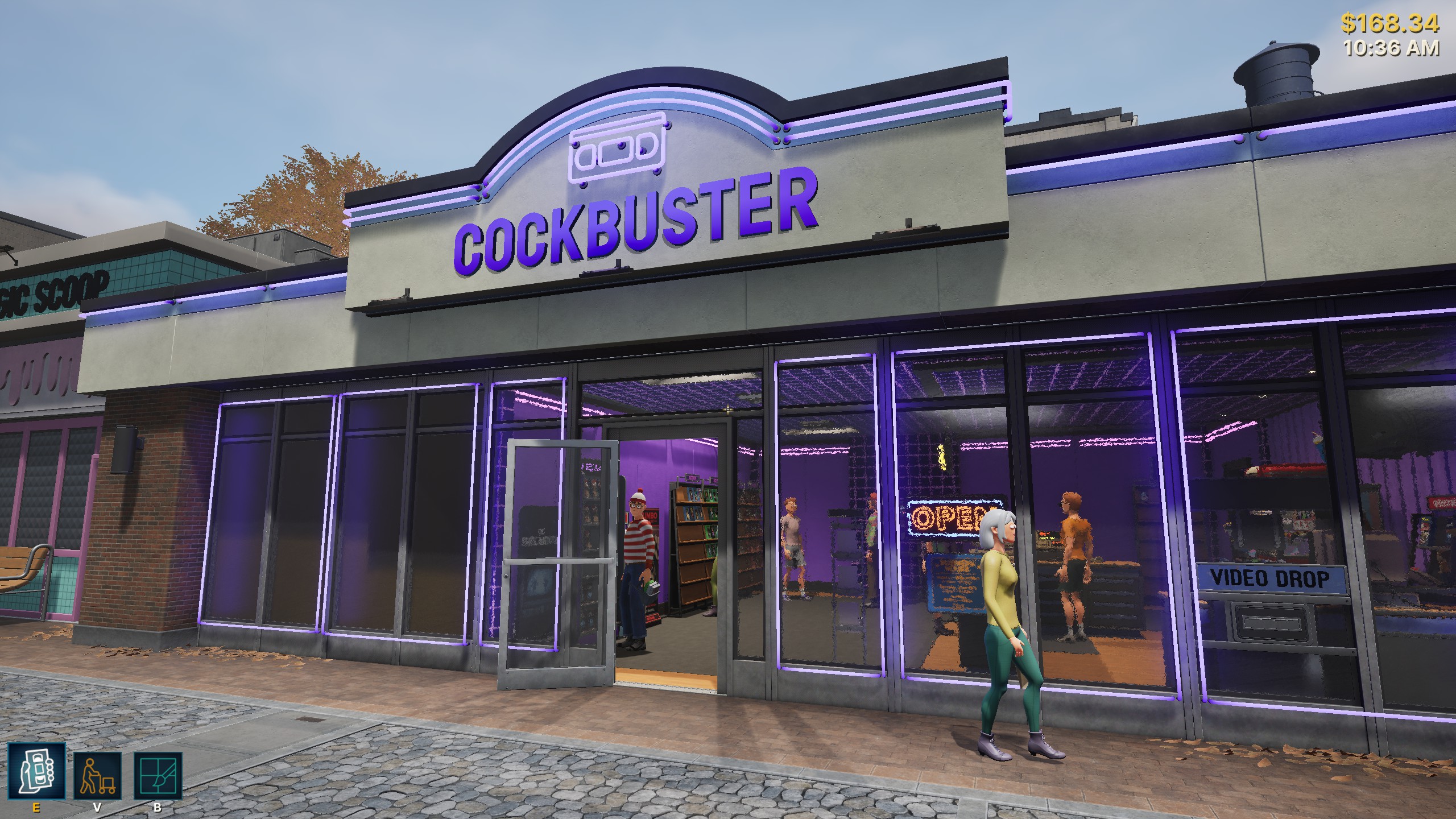
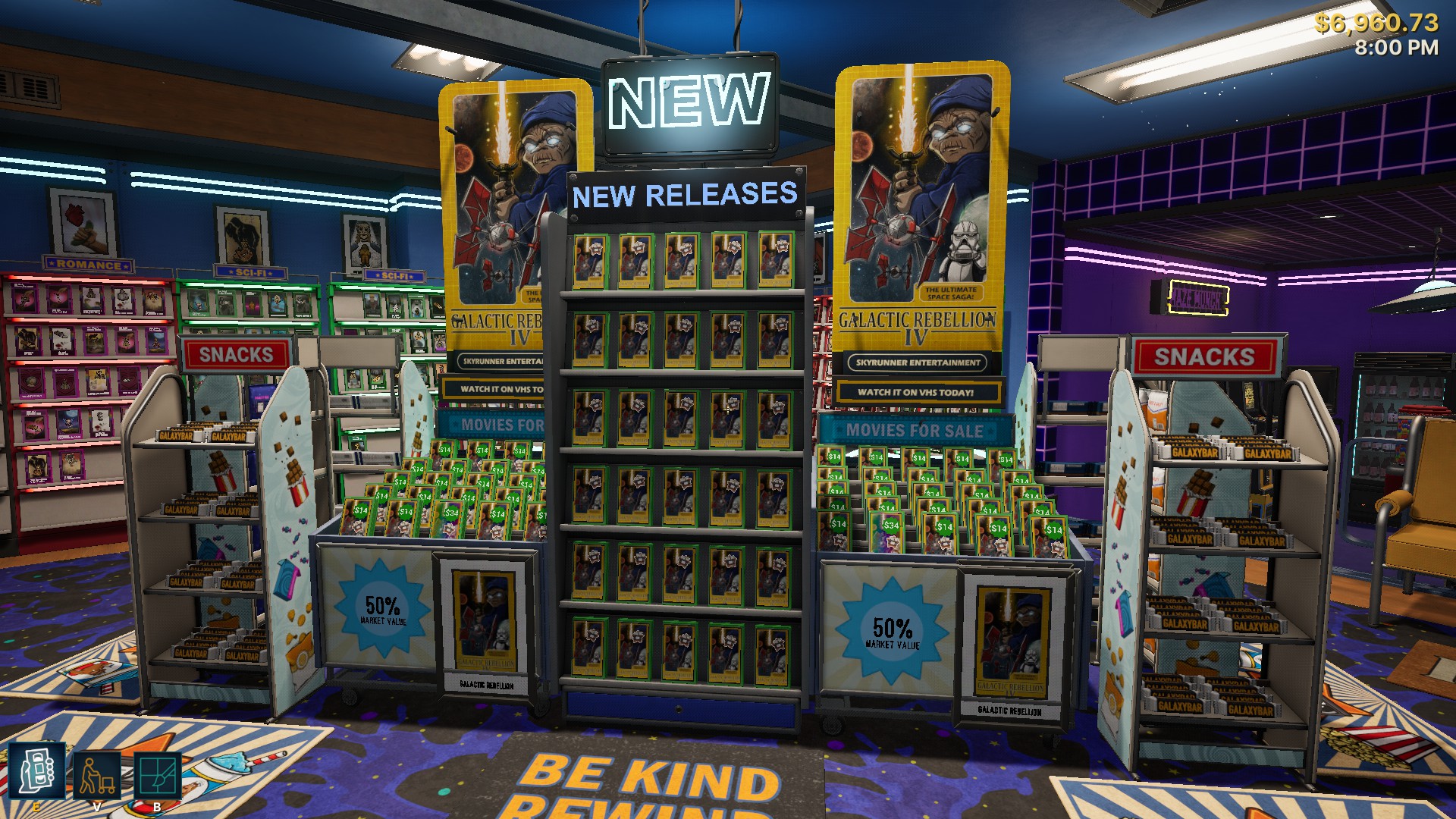
Let’s start with the good stuff, because there’s plenty. The game absolutely nails the late-80s, early-90s aesthetic. The music is a low-fi synth wash that perfectly sets the mood. The store customization is genuinely impressive; from the moment you start, you can repaint walls, change flooring, and pick from a variety of shelf styles for free. That’s a breath of fresh air compared to other sims that nickel-and-dime you for every paint swatch. The sheer volume of hand-drawn VHS covers is staggering, and the procedurally generated movie titles often produce genuine chuckles. “Xeno Cat,” “The Transmogrifiers,” “Preteen Cancerous Shinobi Lizards”—they capture that weird, direct-to-video energy perfectly. The new release spoofs of real 90s films are a particularly nice touch.
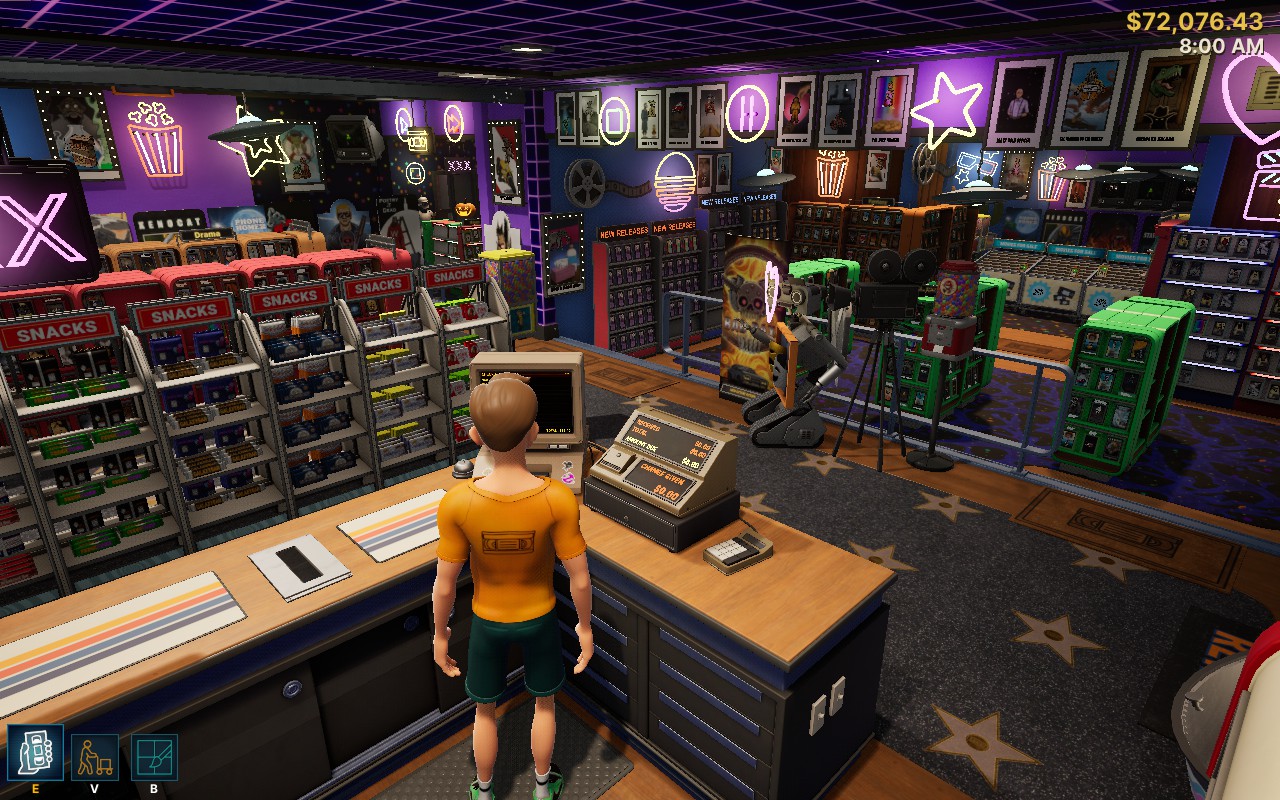
The core gameplay loop is, initially, very satisfying. You order tapes, stock shelves, manage the return station (rewind those tapes, you monsters!), ring up customers, and deal with the occasional angry patron who refuses to pay a late fee. There’s a solid progression system tied to a reputation level, which unlocks new movie genres, snack stations (popcorn, slushies, cotton candy), arcade machines, and larger store expansions. The first ten or so hours are a dopamine factory. You feel like you’re building something. You get attached to your little digital Blockbuster.
But here’s where the tape starts to warp. The game’s biggest problem is that it runs out of runway too quickly. The progression cap is level 20, and you can hit that in under 20 hours. Once you do, the rewards dry up, and the gameplay loop reveals itself to be painfully shallow. You can’t set your own prices. You can’t run sales. There’s no meaningful way to track which movies are your most popular rentals beyond vague intuition. The arcade machines, which cost a fortune, generate a paltry, seemingly hard-capped income. And the big prize—unlocking a second employee at level 20—feels like a cruel joke, because by then there’s almost nothing left to do.
And oh, the employees. I’ve read better AI in a choose-your-own-adventure book. They are slow, infuriatingly stupid, and have more personal problems than a soap opera cast. They fall asleep on the job, call in sick constantly, demand raises, and take ten-minute bathroom breaks while a line of customers snakes out the door. The employee assigned to the return station will take twenty minutes to process a stack of five tapes, even if you’ve hired someone with the “fast” perk. You end up doing their work for them just to keep the store from grinding to a halt. It feels less like management and more like babysitting.
The customers themselves are a mixed bag. They are patient to a fault, which is nice for a relaxing game, but they are also incredibly slow. Watching a customer walk to the counter, place one tape on the surface, and then stand there for ten seconds before placing the next is a special kind of torture. The phone calls, meant to add flavor, quickly become a nuisance. “Is this the pizza place?” “Do you have Xeno Cat reserved?” These interruptions don’t feel like events; they feel like chores you can’t skip.
The game also has a fundamental economic problem. Your daily income plateaus very early. No matter how much you expand, decorate, or hand out flyers, your earnings seem to cap out around $400-$600 a day. This makes the later store expansions feel pointless. You’re spending thousands of dollars to unlock a new room that you can’t afford to fill, and that won’t meaningfully increase your revenue even if you do. The game’s own code apparently hard-caps the number of customers that can spawn, so all that “attract more customers” language in the game’s description is essentially a lie. You’re building a bigger store for an audience that doesn’t exist.
There are also some odd design choices. The “repair” minigame for broken tapes is laughably simple—you just cut the tape and it’s magically fixed. No splicing, no rethreading. It feels unfinished. The snack stations require you to perform a mini-game every time, which becomes tedious rather than fun. And for a game that prides itself on the sheer volume of movie titles, there’s no way to easily sort your inventory or see which tapes are your biggest earners. The office computer is a clunky mess.
I want to be clear: I did enjoy my time with Retro Rewind. For the first ten to fifteen hours, it’s a cozy, nostalgic trip that perfectly scratches a specific itch. The decorating is fun, the music is great, and the feeling of organizing your shelves by genre is deeply satisfying to the orderly part of my brain. But the game asks for $20, and for that price, it feels like a very polished early access title rather than a complete experience. Comparable games like TCG Card Shop Simulator offer more depth, more meaningful progression, and a lower price point.
The developers are active and have a roadmap, which is encouraging. Features like video game rentals and more events are promised. But as it stands right now, the game is a short, sweet burst of nostalgia that fades too fast. It’s a fun rental, but not one I’d buy.
Score: 6/10 – A charming but shallow simulation that captures a lost era beautifully, but fails to build a lasting game around it.