A Farming Sim With Teeth
I’ve been at this hobby long enough to see genres get stitched together like Frankenstein’s monster. Farming sims with combat. Horror games with crafting. Cozy games that aren’t cozy. Usually the result is a lopsided thing that limps along on one good leg. So when I heard about this one—a quiet Japanese village farming sim from the Yomawari people, with rules about not going out at night—I prepared myself for a gimmick. Another haunted harvest. Another spooky scarecrow. Another game that forgets to be a game.
It’s not. It’s actually something good. Finally. Something good.
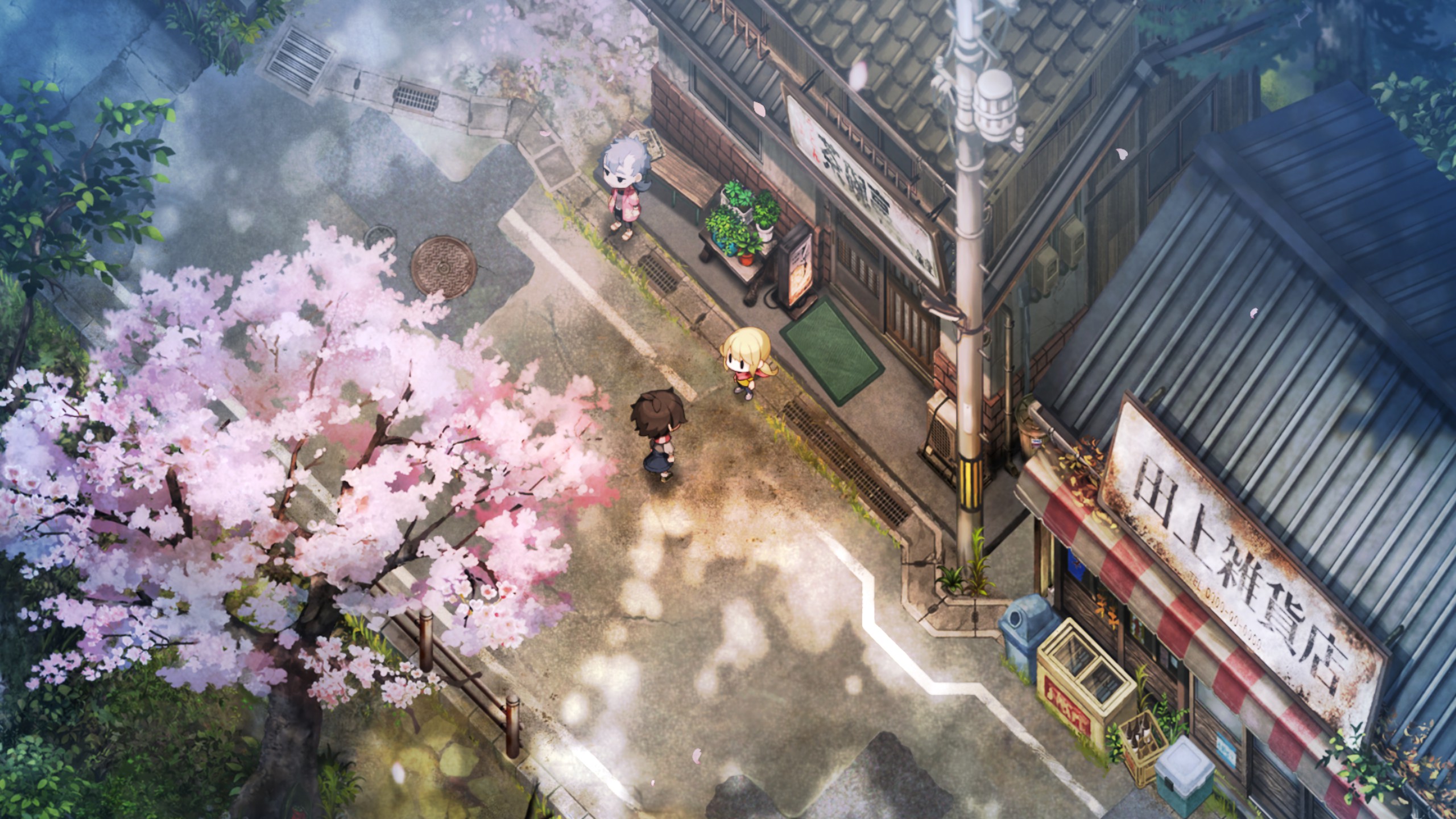
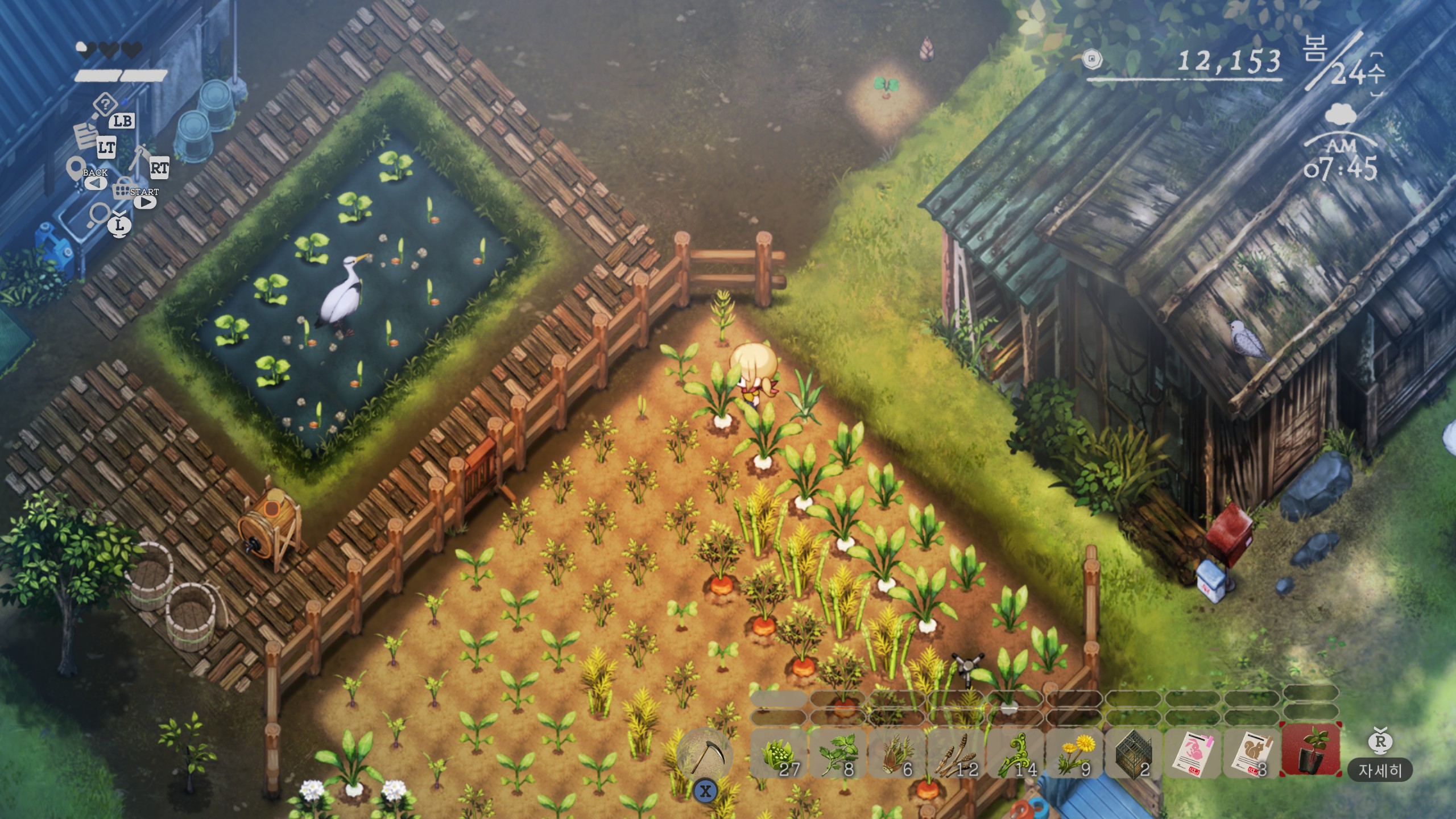
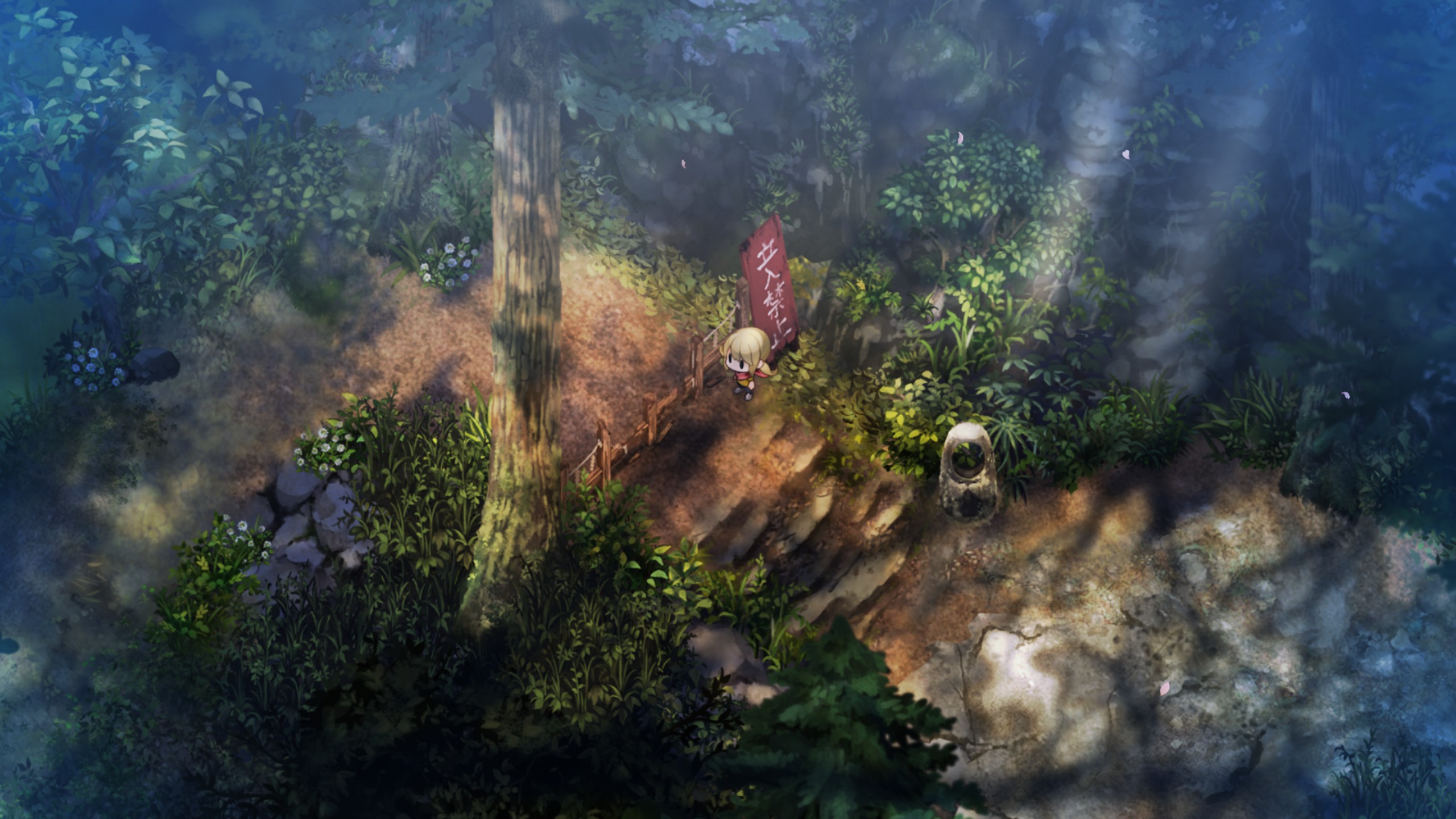
Let’s start with the daylight hours, because that’s where you’ll spend most of your time. The village of Kagatsu is hand-painted and gorgeous in that slightly melancholic way that makes you want to pour a cup of tea and watch the cherry blossoms fall. You plant crops, you water them, you harvest, you process, you sell. Standard stuff, but the standard is high. There’s a tool wheel so your tools don’t clog up inventory. The map marks where villagers and events are. You can fast-travel home early. Passing out at 2 AM doesn’t rob you blind—you just lose a bit of time. These are quality-of-life decisions made by people who actually play farming sims, and I respect that more than I can say.
The farming itself has some nice wrinkles. Repeatedly harvesting a crop permanently raises its quality, and if you win an evaluation event you can brand your produce. There’s hunting with bows and traps, plus a decent amount of processing variety. It’s not going to dethrone Stardew Valley or Rune Factory, but it doesn’t need to. It has its own identity, and it holds its own. I’d say the farming is competent, solid, and occasionally clever. The fishing and mining are more barebones—six fixed fishing spots, mining floors that all look the same—but they don’t ruin the experience. They’re just there.
And then the sun goes down.
Here’s where the game stops being a farming sim and becomes something else. The village has secrets. The rules are simple: don’t talk to strangers, don’t leave the village, and whatever you do, don’t go out at night. Of course you go out at night. The game practically dares you. And when you do, the quiet countryside turns into a haunted maze. Apparitions wander the streets. Bloody handprints appear on walls. Birds explode out of nowhere and scare the hell out of you. The first time it happened, I spilled my coffee. The tenth time, I chuckled. The horror is real but manageable—puzzle-like in structure, with hauntings you can resolve for prizes and rewards. There are jumpscares, yes, but they’re the kind that make you jump, not the kind that make you quit.
I’m not a horror veteran. I play farming sims and old RPGs. But this game’s horror is easy enough to survive, even for someone like me. The default mode, “Village in the Shade,” ties the story and gameplay progression to the supernatural elements. There’s also a “Peaceful Life” mode that cuts the horror entirely, but from what I’ve read, you’d be skipping the best part. The horror isn’t just tacked on—it’s woven into the narrative, and the narrative is the real star here.
The story is the kind that’s hard to pitch without spoiling. It’s a mystery about the village itself, about the secrets everyone carries. The characters have arcs. There’s foreshadowing that pays off. There are themes of love and sacrifice, with Japanese mythology as the backdrop. I’ve read better worldbuilding in a second-hand paperback, but not often, and not in a video game. The characters grow on you. The story touched me in ways I didn’t expect from a game with a watering can as its main icon. I laughed, I sighed, I got gored by a deer in the mountains. That last part is not a metaphor.
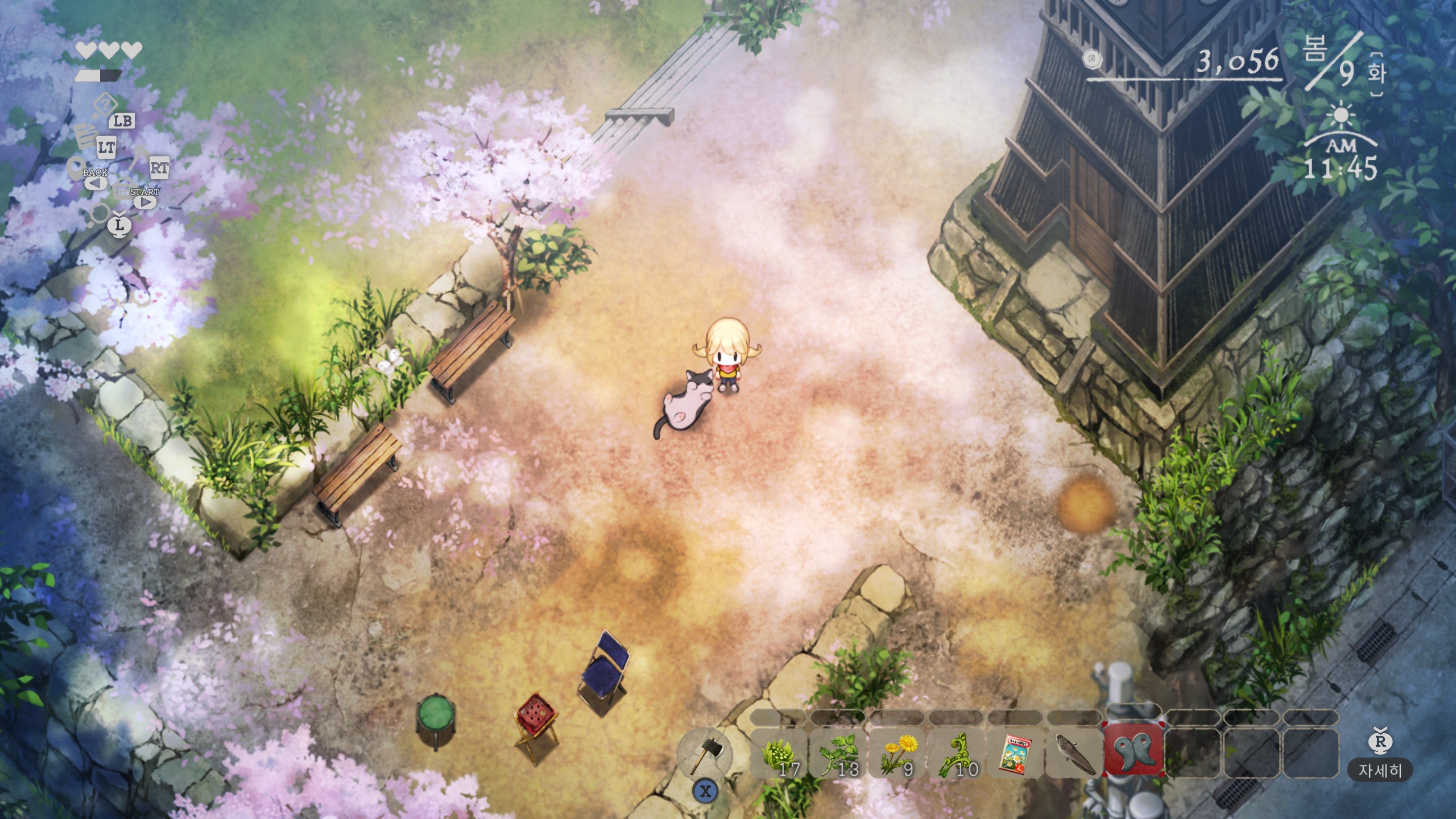
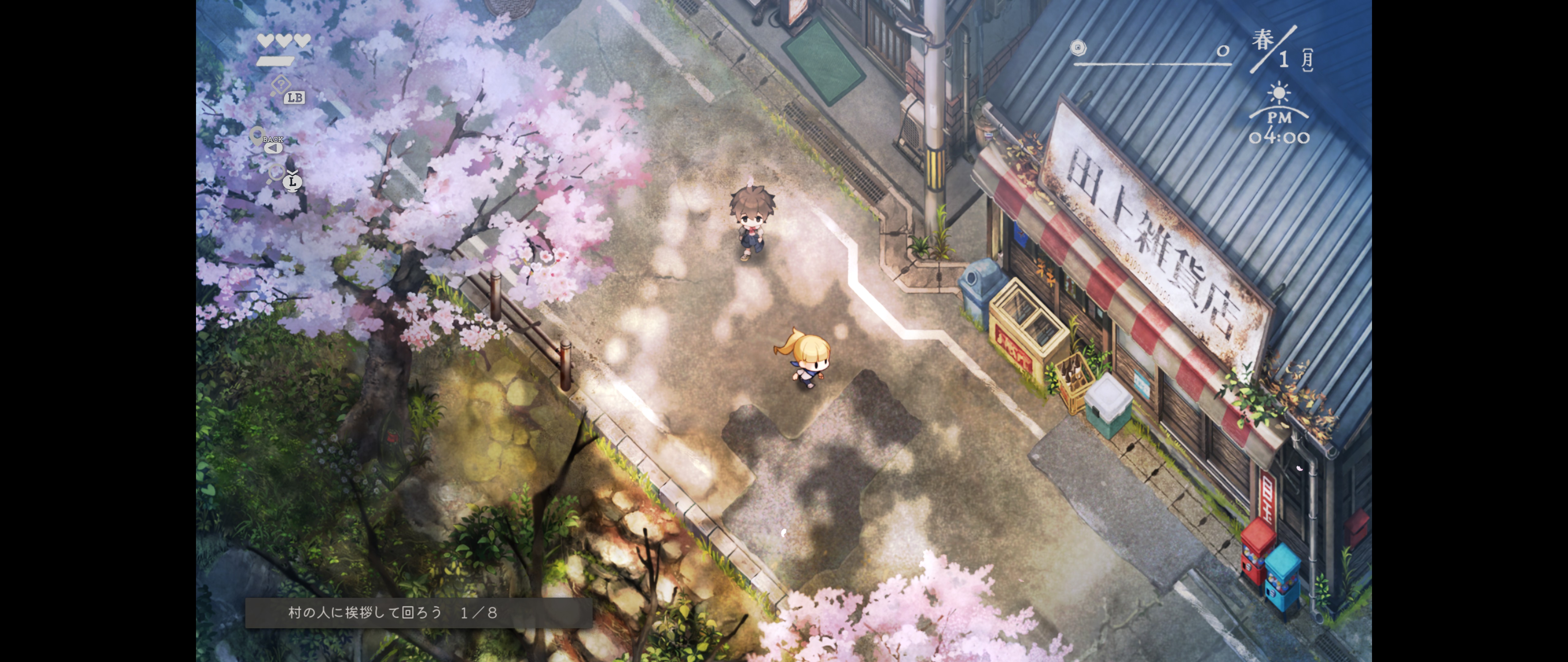
The art and sound deserve special mention. The hand-painted 2D backgrounds are gorgeous, and the sprites are expressive. The soundtrack is atmospheric and fitting—calm during the day, unsettling at night. It’s a huge step up in visual quality and gamefeel from the earlier Yomawari games. There were many moments where I just stopped and stared at the scenery. That’s rare for me. I’m usually too busy complaining about framerates.
Speaking of which: no complaints. The game runs smooth. No stutter, no crashes, no shoddy performance. I know that sounds like faint praise, but in this day and age, a game that ships complete and runs well is worth its weight in gold. Back in my day, a game shipped complete. Now I’m just grateful when it doesn’t set my PC on fire.
Now, the problems. There are a few, and I’m not going to pretend otherwise because that’s not what I do.
First, the controls are mildly janky. The isometric angle makes targeting slightly imprecise, and there’s no toggle to permanently mark the space you’re aiming at. It’s not game-breaking, but it’s annoying during combat and mining. Speaking of combat, it’s pretty vanilla. You swing, you dodge, you swing again. The interesting part is that your farming tools get used in clever ways during boss fights, which is a nice touch, but the core combat is nothing to write home about.
Second, the villager dialogue outside of cutscenes and events gets repetitive fast. You’ll hear the same lines over and over. That’s a shame because the characters themselves are well-written and have good arcs. I just wished they had more to say day-to-day.
Third, there are some RNG issues. One regularly occurring night event is completely random and can eat your entire night if you’re unlucky. Some catalogue completions are at the mercy of spawn rates. The skill tree progression is also somewhat RNG-dependent, and the usefulness of skills varies wildly. And the prerequisites for unlocking certain crops and animals aren’t explained anywhere. I’ve read better instructions on a bar napkin.
Fourth, there’s no romance. The protagonist is a kid, so I get it, but it’s still a bummer for those of us who enjoy the social aspect of farming sims. The relationship system is condensed to five hearts per character, with events tied to story progress. There’s a hidden sixth heart, but it’s not much of a substitute.
And then there’s the language issue. Some players reported that the English trailer was out before the English localization, and you couldn’t switch languages after starting the game. That’s a real problem. I’m reviewing the game after the English release, so it’s less relevant to me, but I feel for those who got burned. Also, the regional pricing disparity is nonsense. Charging different amounts in different regions for the same product is a practice that should’ve died with physical cartridges.
There’s also a moment where a character steals ¥1,000 from you and never returns it. That’s not a bug, I think, but it is a choice. I don’t like it.
But here’s the thing. Despite all those complaints, I kept playing. I played for over 100 hours. I reached the ending, and I still had things left to do. There are collectibles, indexes, community-center-style bundles, and a ton of late-game farming toys to unlock. The game respects your time, even when it’s wasting it. The story can be finished in about 70 hours if you rush, but 100% completion will take you into Year 3 at minimum. That’s the kind of content density I appreciate.
The story is the hook. The horror is the seasoning. The farming is the meal. And the meal is satisfying. I’d say this is the best thing Nippon Ichi Software has put out in years. It’s not perfect—the mining is mediocre, the fishing is shallow, and the festival variety is lacking—but the whole is greater than the sum of its parts. It’s a unique package: Japanese rural living, a supernatural mystery, and a cast of characters that will grow on you like moss on a stone. If you’re here for the farming, you’ll stay for the story. If you’re here for the horror, you’ll stay for the farming. It’s a rare game that appeals to both audiences without shortchanging either.
I’m not going to pretend this game is for everyone. If you want pure horror, this will be too cozy. If you want pure farming, the horror might put you off. But if you’re willing to embrace the odd marriage of genres, you’ll find something special. Something that feels like a love letter to Japanese rural life and folklore, wrapped in a farming sim and tied with a bloody ribbon. I’ve played worse. I’ve played a lot worse. This one, I’ll remember.
Verdict: 8/10. Recommended for anyone who’s ever wondered what would happen if Stardew Valley had a secret basement and the villagers weren’t just quirky—they were hiding something. Just follow the rules. Or don’t. The night is where the real game is anyway.
That’s all for now. I’m going to go water my turnips and try not to think about the handprints on my window.