Waterpark Simulator Review: A Surprisingly Charitable Dip in the Sim Slop Pool
I went into Waterpark Simulator expecting to hate it. You see, the market is flooded with these first-person management sims—asset-flip Unity jank with a veneer of gameplay and a soul of spreadsheet. I’ve seen enough of them to fill a landfill. But something about this one, a waterpark builder with ragdoll physics and a promise of no AI-generated assets, made me curious. So I clicked purchase, sighed, and prepared to write a scathing takedown.
Well, I was wrong. Mostly.
Let’s get the obvious out of the way: this is an Early Access game, and it shows. The first hour is a slog. You start with a muddy hole pretending to be a pool, broken toilets that leak onto the pavement, and a handful of guests who look like they were modeled by someone who’s only seen humans in a fever dream. The controls are floaty, the physics are absurd, and the tutorial basically says “good luck.” It’s the kind of jank that would make a lesser reviewer close the game and refund. But I’ve been playing since the Atari 2600. I know jank. And this jank has heart.
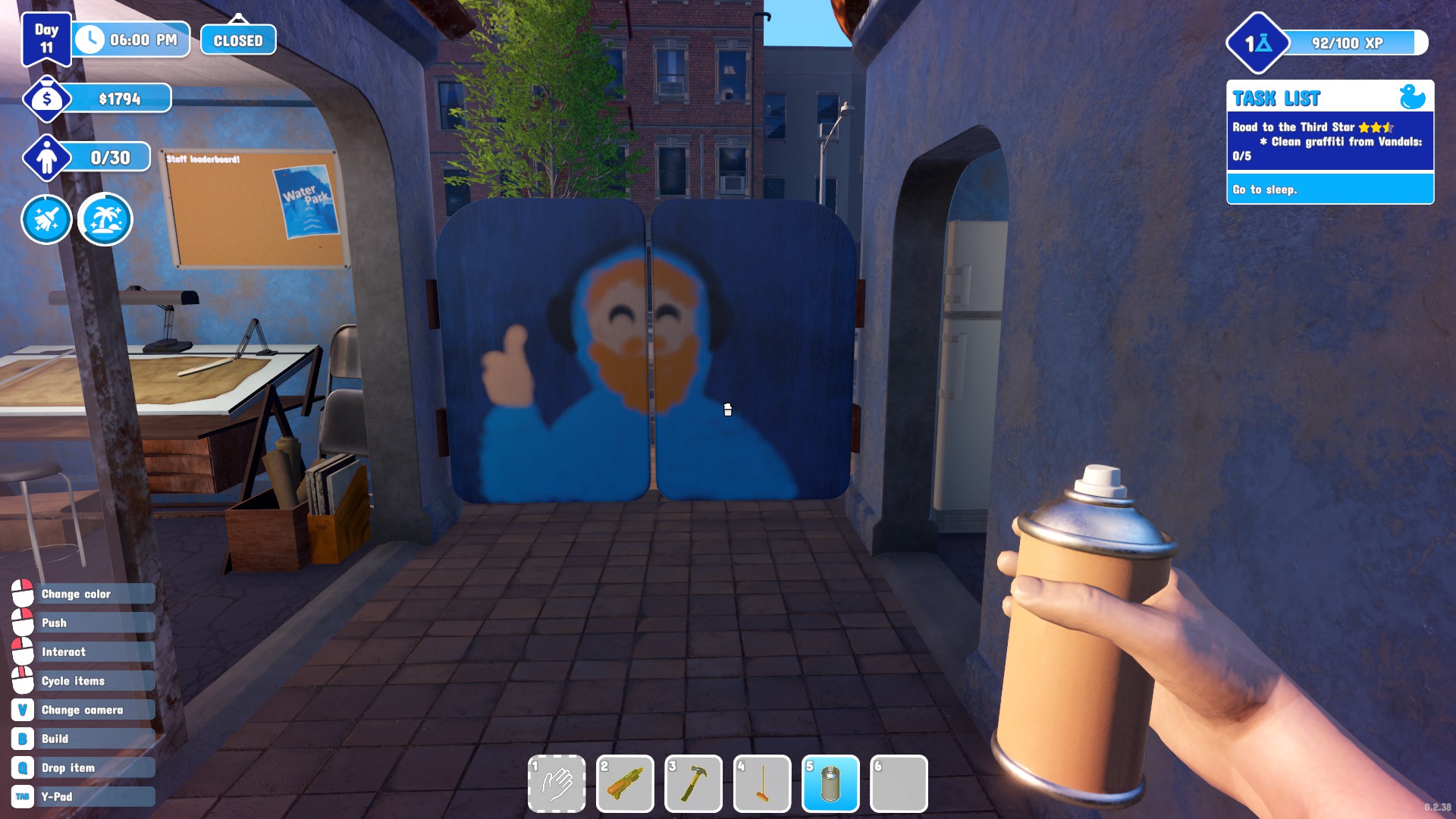
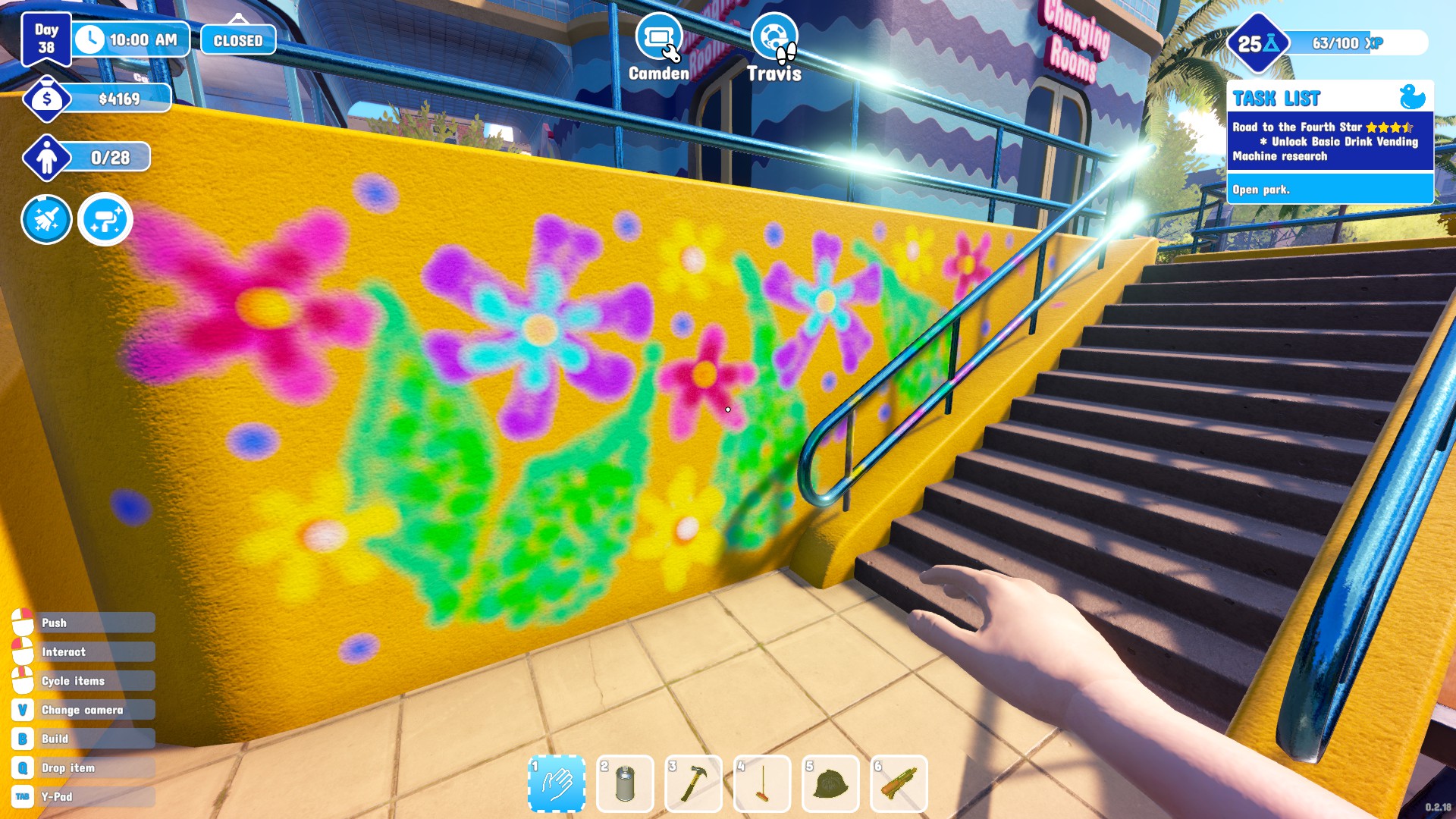
The early game is all about multitasking. You’re selling tickets, serving hot dogs, scrubbing graffiti off walls, fixing broken slides, and scooping… let’s call it “unmentionable solids” out of the pool. It’s chaotic, but it’s the good kind of chaos. You’re a one-person park staff, and every mistake—like letting a guest slip on a puddle and ragdoll into the deep end—is comedy gold. The ragdoll physics are delightfully broken. I sent a guest flying off a slide and watched him bounce off a vending machine, land in a trash can, and then get run over by a golf cart. I laughed. I’m not proud of it, but I laughed.
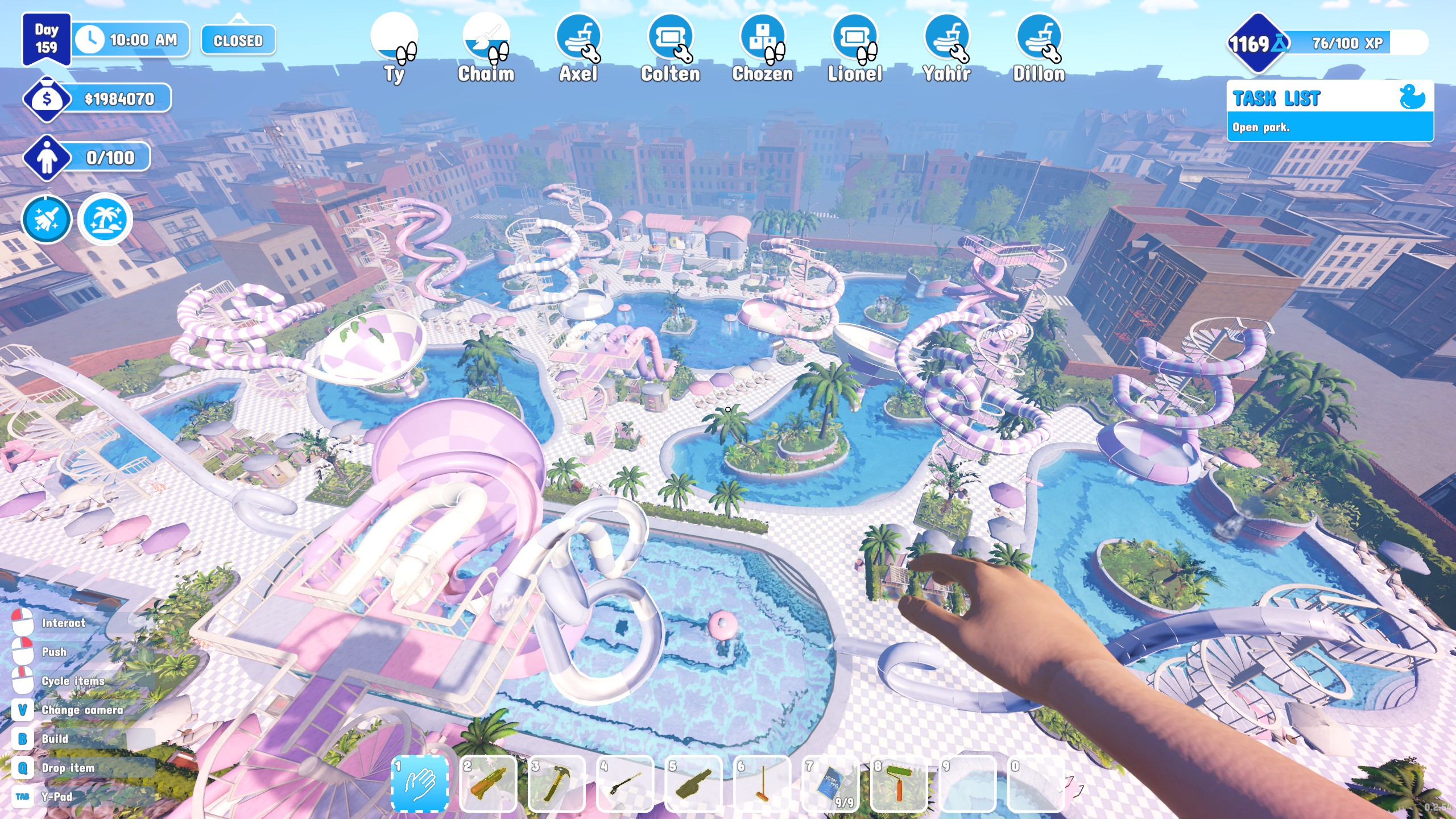
As you level up, you unlock new slides, decorations, and eventually employees. That’s when the game shows its real face. It’s not just a simulator; it’s a tycoon game in first-person clothing. I’d compare it more to old-school Rollercoaster Tycoon or Zoo Tycoon than to the recent wave of supermarket sims. You design your park from the ground up—painting walls, placing signs, building custom slides (when the feature lands), and managing guest happiness. The customization options are surprisingly deep for a game that looks like it was built by a team of three in a garage.
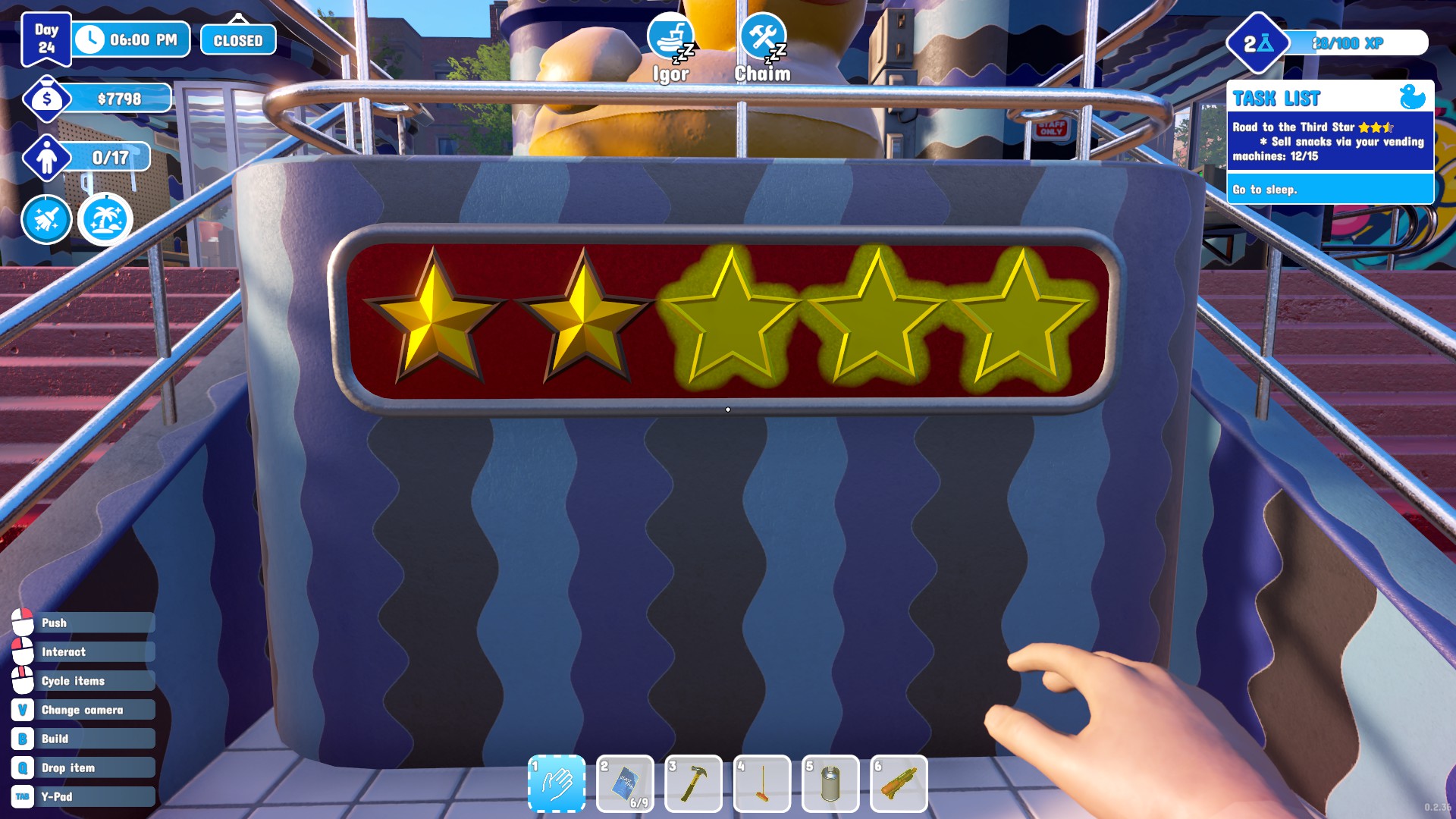
But here’s where I have to put on my grumpy old man hat. The game runs like a three-legged horse once your park gets big. I’ve got a mid-range gaming laptop, and after I hit about 50 guests, the framerate started chugging. The constant stream of notifications—guest hungry, guest stinky, guest peeing in the pool—becomes a headache. And the puddles. Oh, the puddles. They’re a fun gimmick for the first five in-game days, but when you’re a five-star park and still mopping up after every splash, it stops being cute and starts being a chore. I hired two janitors and myself, and I still couldn’t keep up. The late game turns into “garbage pickup simulator,” and that’s where my interest started to wane.
Some players report no bugs and smooth performance. Good for them. I hit a few minor annoyances—guests clipping through walls, staff taking breaks at the worst possible times, and one memorable incident where a lifeguard decided to go on break while someone was drowning. It’s the kind of jank that’s charming at first but gets old fast.
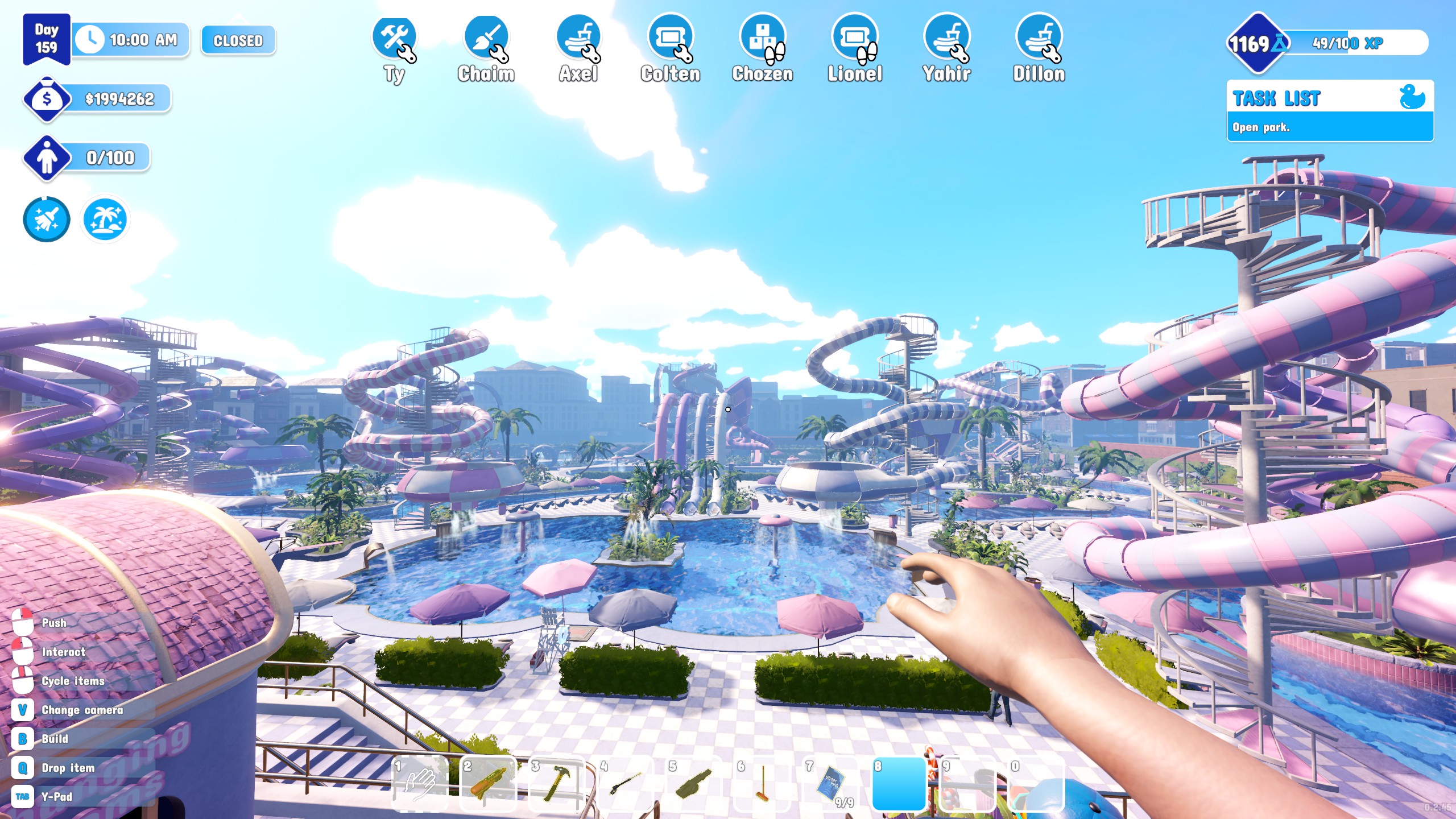
Still, I kept playing. Why? Because the game has a soul. The developers are active, they listen to feedback, and they’ve proudly stated no AI was used in making this game. That’s refreshing in an era where half the indie market is slop generated by algorithms. The community is also something else—players are making fan lore for NPCs, renting billboards with streamer faces, and creating fake websites for their in-game parks. That kind of engagement doesn’t happen with a bad game.
There’s no story here, no worldbuilding in the traditional sense. But I’ve read better lore on a bar napkin. The game doesn’t need a narrative; the emergent stories are enough. I sold a hundred hot dogs, broke someone’s neck, got hit by a car, watched another guest get hit by a car, and pet a dog. In one session. That’s the kind of gameplay loop that keeps you coming back.
Is it worth the price? Yes, especially if you’re a fan of the genre. But I’d add a caveat: if you have a lower-end PC, wait for optimization patches. The late-game lag is real, and the repetitive cleanup tasks might sour the experience. The devs have a roadmap with multiplayer, custom slides, and more events, so there’s potential. As it stands, Waterpark Simulator is a messy, wonderful, infuriating, and genuinely fun game. It’s not a masterpiece, but it’s a labor of love. And in this industry, that counts for a lot.
Score: 8/10